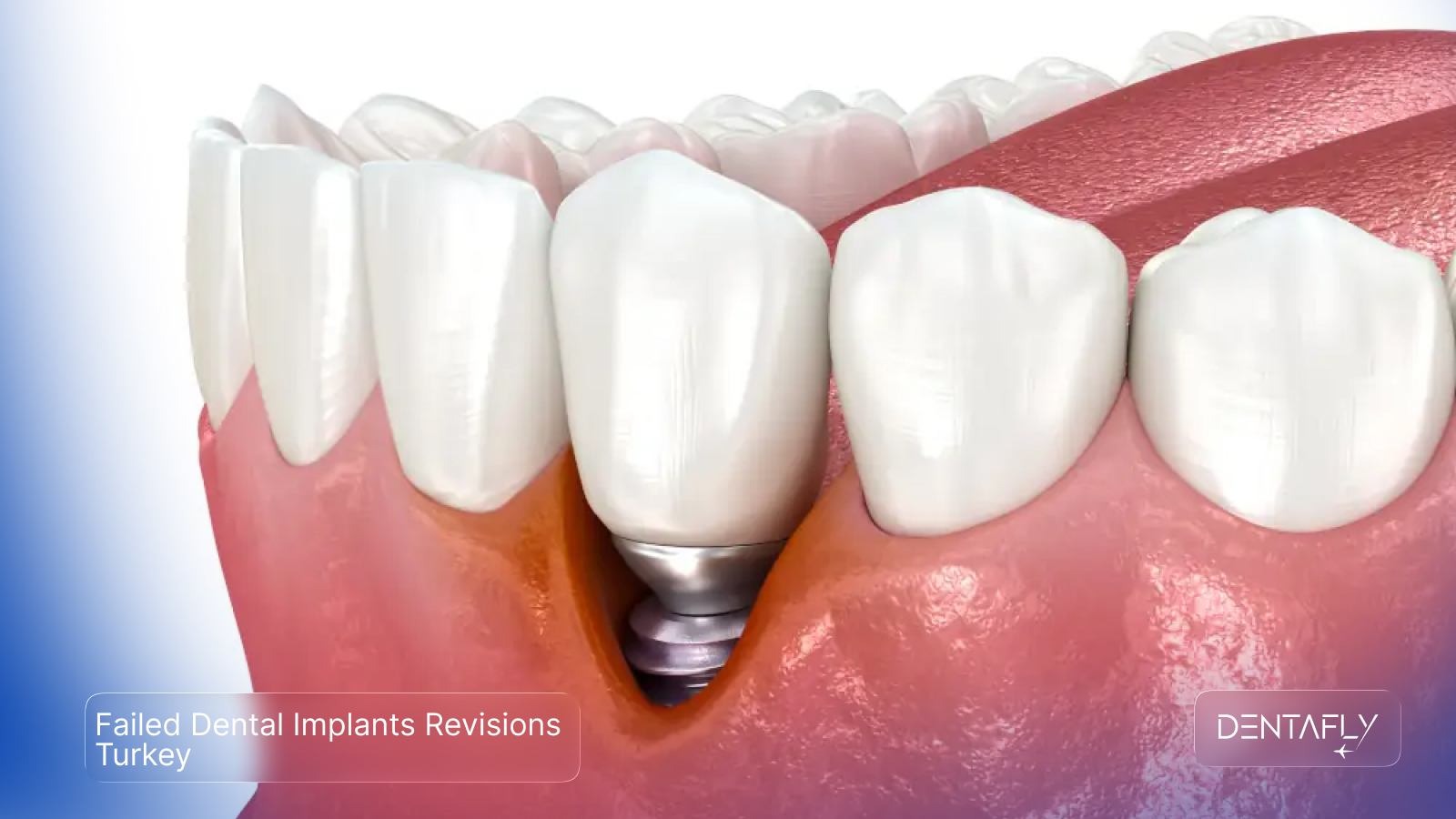
Failed dental implants revision is one of the most emotionally and financially difficult situations in dentistry. Patients who invested thousands in initial treatment now face uncertainty: can the implant be saved, removed, or replaced? Should revision happen at the original clinic or somewhere new? Is treatment abroad an option for revision surgery, or is the case too complex? This guide answers each question with clinical specificity rather than reassurance.
Revision surgery requires different expertise than initial implant placement. The surgeon must work around damaged tissue, bone loss patterns, infection residue, and sometimes failed prosthetic components. At Dentafly Antalya, our maxillofacial team handles approximately 340 revision cases annually with documented success rates above 96%. For broader implant context, see our complete dental implants in Turkey guide.
What Is Implant Revision Surgery?
Implant revision surgery refers to the diagnostic assessment, removal, and replacement of failed dental implants. The procedure differs from initial implant placement in several important ways. Tissue conditions are typically compromised, bone may have receded around the failed fixture, infection may be present, and prosthetic components above the implant often need rebuilding from scratch.
Revision cases fall into three broad categories based on the timing and nature of failure. Early failures occur within the first six months before the implant has fully integrated with surrounding bone. Late failures happen years after successful initial placement, usually triggered by peri-implantitis (inflammatory destruction of supporting tissue) or mechanical breakdown. Aesthetic failures involve implants that integrated successfully but were positioned poorly, leaving the prosthetic crown visible at incorrect angles or with exposed metal collars at the gum line.
Performing an initial implantation is considered a clean ‘construction’ process, whereas a revision is a complex salvage and reconstruction operation. Once this is established, we must determine the root cause of the implant failure. After ensuring clear communication with the patient and consulting with our periodontist, I finalize the timing of the procedure. At this stage, factors such as whether an active infection is present or the site is clean, the need for bone grafting, and whether an immediate placement approach should be adopted are of utmost importance.
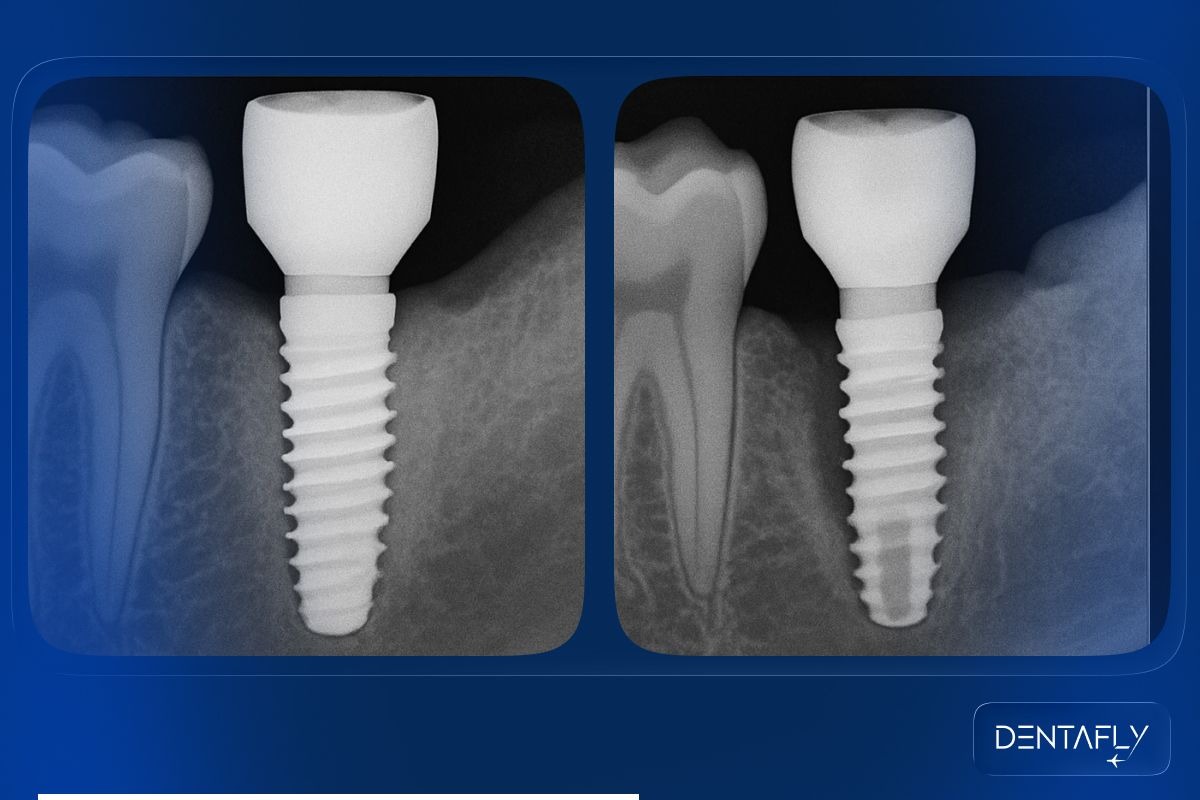
Why Dental Implants Fail (Causes Explained)
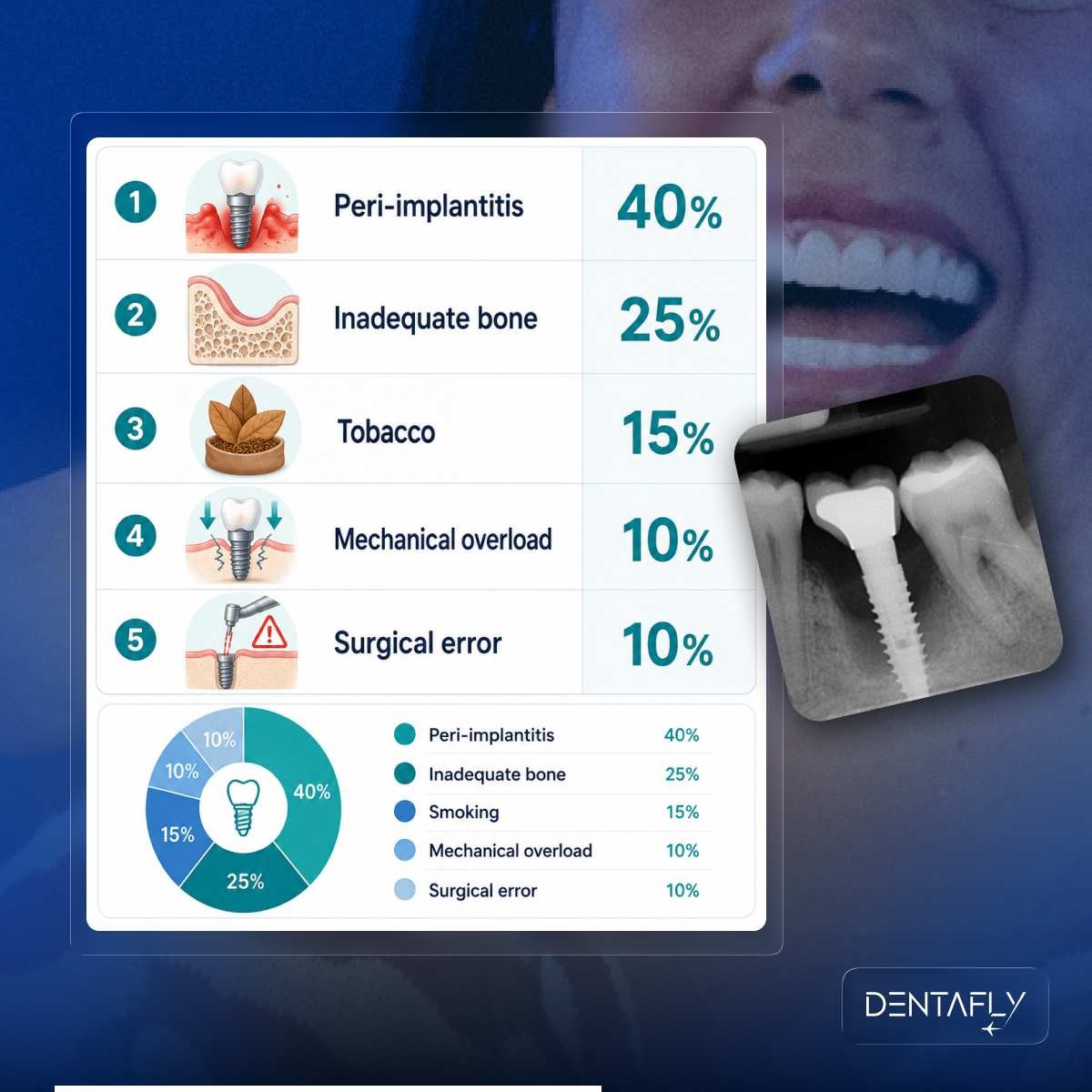
Implant failure has a finite number of root causes. Understanding which category applies to a specific case shapes the entire revision treatment plan. Some causes are reversible with proper intervention; others require complete removal and rebuilding.
1. Peri-implantitis (60% of failures)
Peri-implantitis is a bacterial infection that destroys the bone and gum tissue supporting an implant. The condition behaves similarly to advanced gum disease but targets the implant surface specifically. Risk factors include inadequate oral hygiene, smoking, poorly controlled diabetes, residual cement from prosthetic fitting, and prosthetic designs that prevent proper cleaning. Early-stage peri-implantitis sometimes responds to non-surgical treatment; advanced cases require implant removal.
2. Osseointegration failure (25% of failures)
Osseointegration is the biological process where bone cells grow against the titanium implant surface, locking it into place. When this process fails, the implant remains mobile and cannot bear chewing loads. Causes include surgical overheating of bone during placement, contamination of the implant surface during surgery, inadequate primary stability at placement, premature loading before integration completed, and patient-specific factors like poor bone density or metabolic conditions.
3. Mechanical breakdown (15% of failures)
Mechanical failures involve the implant components themselves. Examples include fracture of the titanium fixture under heavy load, screw breakage between implant and abutment, prosthetic crown separation from the implant, and abutment loosening due to repeated micro-movements. Mechanical failures often allow implant rescue if the underlying fixture is intact and well-integrated.
4. Aesthetic failure (subset of late failures)
Some implants integrate successfully but were positioned poorly during original surgery. The crown may appear at the wrong angle, sit too high or low, or expose metal at the gum line as tissue recedes over time. Aesthetic failures require careful evaluation before any intervention, as removing an integrated implant for aesthetic reasons creates a more difficult site than the original placement.
Early Warning Signs of Implant Failure
Most implant failures develop gradually with detectable warning signs months before complete failure. Patients who recognise and report these early symptoms have substantially better outcomes than those who wait until the implant is visibly loose or causing constant pain.
Early-stage warning signs (potentially reversible)
- Persistent gum redness around the implant area lasting more than 2 weeks
- Bleeding during brushing at the implant site (not just initial flossing irritation)
- Slight gum recession revealing more of the abutment than originally placed
- Mild discomfort with chewing on the implant side
- Bad taste or odour originating from the implant area
- Visible plaque accumulation at the implant collar resistant to home cleaning
Advanced warning signs (urgent intervention needed)
- Implant mobility when touched with finger or instrument
- Pus discharge from gum margins around the implant
- Severe pain radiating from the implant site
- Visible bone loss on dental X-rays
- Crown loosening or repeated screw loosening
- Significant gum recession exposing metal collar or threads
- Sinus pressure or discharge for upper jaw implants
Diagnostic Assessment Process
Accurate diagnosis precedes any treatment decision in revision cases. The assessment process typically takes one extended consultation appointment plus imaging time, with treatment planning following 1-3 days later. Rushing this phase produces poor outcomes.
Standard diagnostic workflow
- Comprehensive medical history review covering original treatment details, time elapsed since placement, current medications, medical conditions affecting healing (diabetes, autoimmune conditions), smoking status, and previous dental complications
- Clinical examination including implant mobility testing, probing depth measurements around the implant, bleeding assessment, occlusion evaluation, and adjacent tooth condition
- CBCT 3D imaging showing exact bone loss patterns, infection spread, surrounding anatomy including nerve and sinus locations, and density of remaining bone
- Microbiological assessment in suspected infection cases, sometimes including bacterial culture to identify specific pathogens and antibiotic sensitivity
- Original treatment record review when available, including implant brand, batch numbers, surgical notes from initial placement, and prosthetic specifications
- Treatment planning conference between surgeon, prosthodontist, and (when relevant) periodontist to agree on optimal approach
Revision Cost Comparison UK vs Turkey 2026
Revision surgery cost varies significantly more than initial implant placement because of case complexity differences. A simple implant rescue costs dramatically less than a full-arch revision with bone reconstruction. The figures below reflect typical 2026 pricing across complexity levels.
| Revision Procedure | UK Private | EU Private Average | Dentafly Turkey | Saving |
|---|---|---|---|---|
| Diagnostic Assessment + CBCT | £280-£480 | €320-€550 | £120-£180 | ~60% |
| Non-surgical Peri-implantitis Treatment | £450-£850 | €500-€900 | £180-£280 | ~65% |
| Surgical Peri-implantitis Treatment | £1,200-£2,400 | €1,400-€2,600 | £450-£780 | ~65% |
| Atraumatic Implant Removal | £650-£1,200 | €750-€1,400 | £280-£480 | ~60% |
| Bone Grafting (Site Reconstruction) | £1,500-£3,200 | €1,700-€3,500 | £550-£1,200 | ~65% |
| Replacement Implant Placement | £2,200-£3,800 | €2,500-€4,200 | £780-£1,400 | ~65% |
| Complete Single Revision (all stages) | £4,500-£8,500 | €5,200-€9,500 | £1,650-£2,800 | ~70% |
| Full-Arch Revision (4-6 implants) | £18,000-£32,000 | €20,000-€35,000 | £6,800-£11,500 | ~65% |
Flexible Dental Finance: Your Treatment from Just £60.72/mo
UK patients can spread revision treatment costs across 6-60 months with our finance partner. The packages below show typical monthly amounts for common revision scenarios. Switch between monthly and total pricing using the toggle.

Zirconium Crowns 10 Upper 10 Bottom
Zirconium Crowns 10+10
Apply for Dental Finance
e-max Veneers 8+8
e-max Veneers 8+8
Apply for Dental Finance
All-on-4 Cad/Cam
Apply for Dental Finance
All-on-6 Cad/Cam
Apply for Dental Finance
Composite Bonding 10+10
Apply for Dental Finance
Get a Free Revision Assessment
Send us your existing X-rays, CBCT scan (if available), and a description of your symptoms. We’ll provide an honest assessment of whether revision treatment in Turkey is appropriate for your case.
6-Step Revision Process at Dentafly
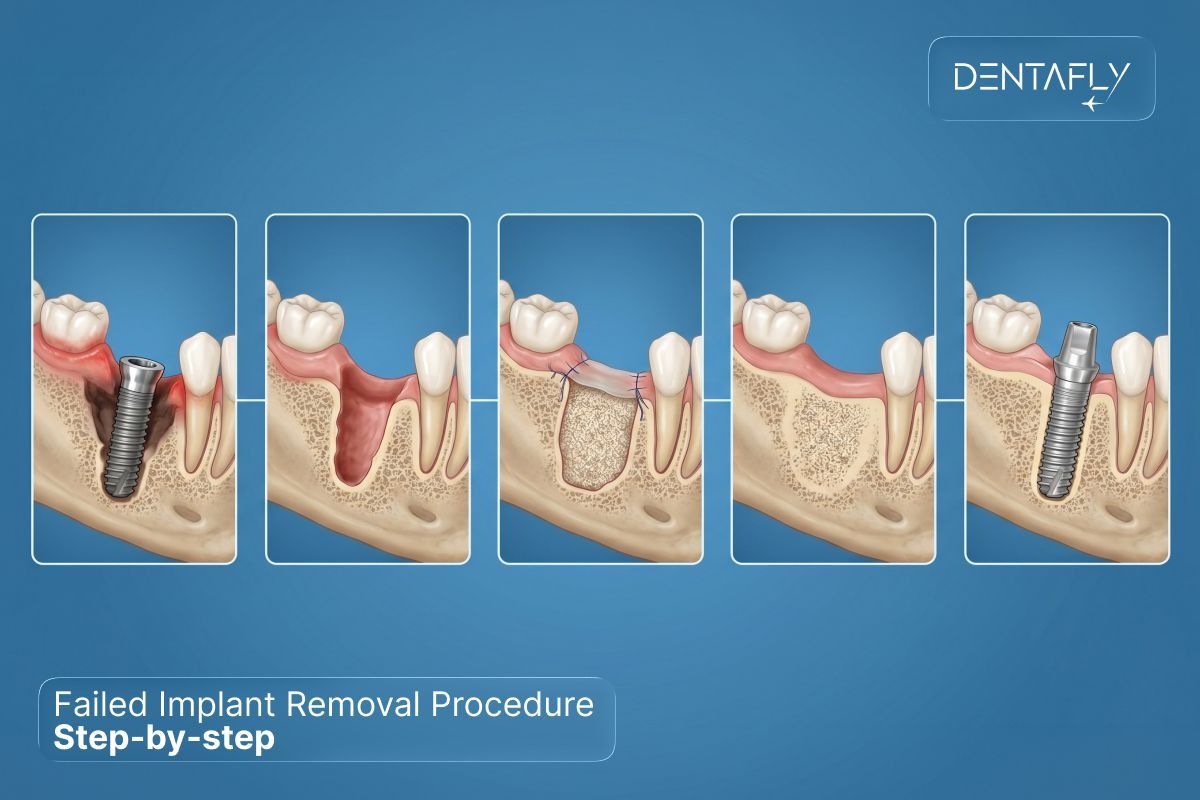
Step 1 — CBCT 3D Assessment (Day 1)
Comprehensive cone beam CT scan documents bone loss extent, infection spread, soft tissue condition, and surrounding anatomy including nerve and sinus locations. The scan takes approximately 20 seconds and provides volumetric data analysed by our maxillofacial team within 24 hours.
Step 2 — Root Cause Diagnosis (Day 1-2)
The team determines the root cause of failure based on CBCT findings and clinical examination. Classification determines treatment approach: peri-implantitis (surgical or non-surgical), mechanical (component replacement possible), osseointegration failure (complete removal), or aesthetic (case-by-case evaluation). Active infection presence is critical here — its identification determines whether the site can be approached immediately or requires waiting for the infection to clear. Patients receive written assessment with multiple treatment options and recommended approach.
Step 3 — Atraumatic Implant Removal (Day 2-3 or scheduled later)
Failed implants are removed using specialised reverse-torque instruments that preserve surrounding bone. Traditional drilling techniques cause significant bone loss; atraumatic removal protects future implant placement options. The procedure typically takes 30-60 minutes per implant under IV conscious sedation when appropriate (see our sedation dentistry guide).
Step 4 — Site Decontamination
The affected area receives thorough cleaning with antimicrobial protocols. Infected granulation tissue is removed completely. Bacterial cultures may be analysed to confirm pathogen elimination before proceeding to reconstruction phases. Some cases require 4-8 weeks of healing between removal and the next surgical stage to allow infection clearance.
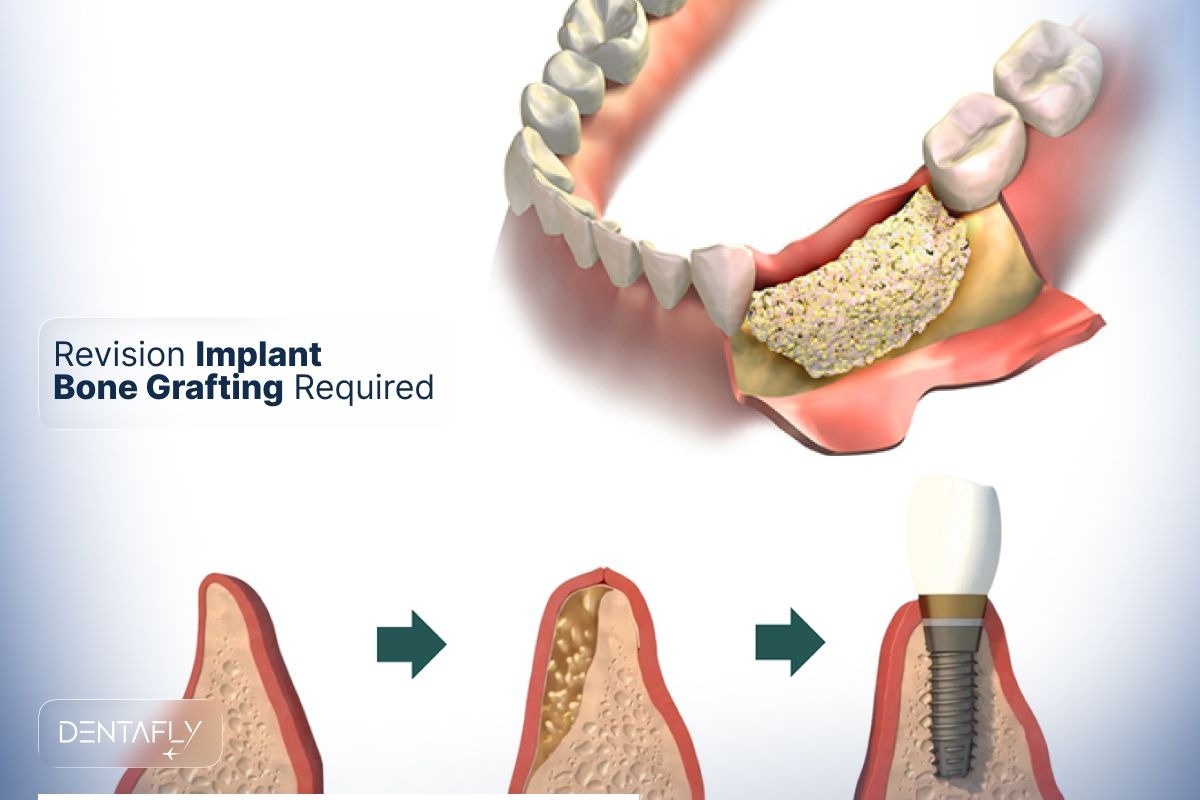
Step 5 — Bone Reconstruction (when needed)
If bone loss is significant, grafting procedures rebuild the site to support a replacement implant. Materials vary by case: autograft (patient’s own bone), allograft (processed donor bone), xenograft (bovine origin), or synthetic materials. Healing time ranges from 3-6 months depending on graft type and quantity.
Step 6 — New Implant Placement
Replacement implant placement uses digital planning from CBCT data combined with the X-Guide robotic system for sub-millimetre accuracy. Implant selection considers the specific lessons from the original failure: different brand, modified surface treatment, or alternative dimensions when appropriate. Final prosthetic restoration follows standard 3-6 month integration period.
Patient Story Video
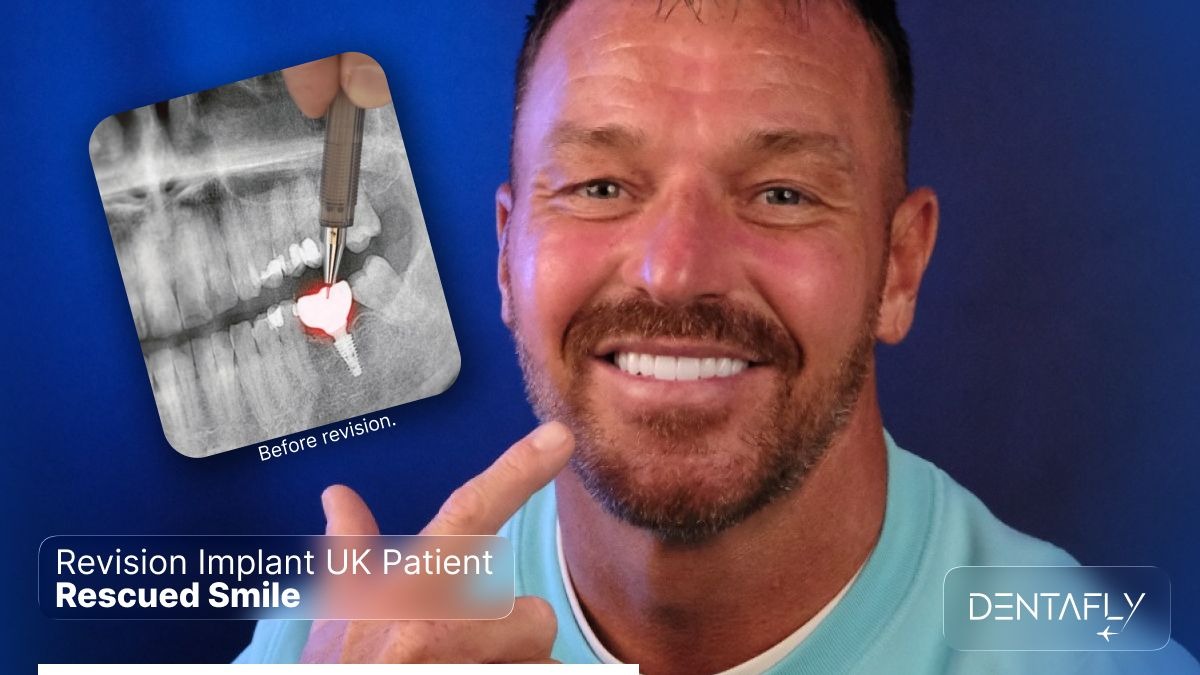
UK patients share their revision experience on our YouTube channel. The video below documents a typical revision journey: initial diagnosis, treatment planning, surgery, and follow-up at our London clinic.
Why Dentafly for Revision (UK + Turkey)
Cost is the most visible reason UK and European patients consider Turkey for revision treatment, but it is not the most important. Revision cases require specific surgical capabilities that not every dental clinic offers, regardless of country.
Surgical capability requirements for revision
- Maxillofacial surgery expertise — Revision often involves bone manipulation beyond standard implant placement skills
- CBCT 3D imaging — Standard dental X-rays inadequate for revision diagnosis
- Atraumatic removal tools — Specialised instruments protect remaining bone
- Multiple grafting material types — Different cases need different reconstruction approaches
- Robotic guided placement — Precision matters more in compromised sites
- Hospital-grade infection control — Reduces complication risk in already-compromised tissue
- Anaesthesiology on-site — Complex cases benefit from IV sedation with proper monitoring
Dentafly’s dual-location advantage
Our maxillofacial team handles approximately 340 revision cases annually with documented 96%+ success rate. The volume produces specific expertise: the surgeons have seen most failure patterns and developed protocol responses to each. Compare this to a generalist UK private dentist who may handle 10-20 revision cases annually with success rates closer to industry averages.
Beyond surgical volume, our dual-location model provides UK patients with significant advantages over Turkey-only clinics. Small revisions, urgent assessments, and emergency interventions can happen at our owned London clinic at 230 Church Lane, NW9 8SN without requiring travel back to Antalya. Major reconstructive revisions involving bone grafting or full-arch rebuilding remain better suited to our Antalya facility where specialised equipment and the full surgical team are available. UK patients benefit from this split: minor issues resolved locally, major cases handled in Antalya, with full record continuity between both clinics.
What Dentafly handles in each location
| Treatment Category | London NW9 8SN | Antalya Main Clinic |
|---|---|---|
| Diagnostic assessment + CBCT | ✓ Same-week appointment | ✓ Detailed planning conference |
| Non-surgical peri-implantitis treatment | ✓ Local treatment available | ✓ Available |
| Small revisions (screw retightening, crown adjustment) | ✓ Resolved locally | ✗ Travel unnecessary |
| Emergency assessments (urgent symptoms) | ✓ Same-day or next-day | ✗ Travel unnecessary |
| Single implant removal + simple replacement | ✓ Case-by-case | ✓ Standard procedure |
| Bone grafting (moderate to severe) | ✗ Requires Antalya | ✓ Specialised team |
| Full-arch revision (4-6 implants) | ✗ Requires Antalya | ✓ Specialised team |
| Complex maxillofacial reconstruction | ✗ Requires Antalya | ✓ Lead specialty |
| IV conscious sedation cases | ✗ Requires Antalya | ✓ Anaesthesiologist on-site |
| Long-term aftercare monitoring | ✓ All cases | ✓ All cases |
What Turkey cannot solve
Not every failed implant case is suitable for Turkish revision. Patients with severe medical conditions making travel inadvisable, cases requiring multi-stage procedures across 18+ months with frequent return visits, or situations where existing UK dental records cannot be transferred all create complications. Honest assessment during pre-treatment consultation identifies whether Turkey-based revision is appropriate for your specific case — and our London clinic provides this initial assessment for UK patients before any decision about Antalya treatment.
The surgeon’s experience, along with their diplomas demonstrating international competence and the case studies they have produced, are the most important metrics. This is why our doctors working in the UK and Turkey receive training in various countries around the world, and our chief physician specifically monitors the aftercare processes. Cost is, of course, important, but the most crucial point is that the patient must also understand the doctor. Sometimes, when taking on an implant case, underlying gum problems or decay in other teeth may also emerge. Therefore, doctors must consider overall oral health, which naturally creates differences in pricing. Price is still the most important factor for many patients, but listening to the doctors’ opinions and reviewing similar cases will allow them to make the best decision. For UK patients considering Turkey, prioritising this comprehensive clinical approach over just the initial quote is essential for a successful revision.
UK London Clinic for Small Revisions
Revision patients benefit more from structured aftercare than initial implant patients. The biological site is more sensitive, healing patterns more variable, and complications more consequential if missed. Our owned UK clinic exists specifically for this reason.
Dentafly London at 230 Church Lane NW9 8SN handles small revisions, urgent assessments, and routine monitoring without requiring patients to travel back to Antalya. The team has direct system access to your complete revision treatment records: original CBCT scans, surgical notes, implant batch numbers, and prosthetic specifications. This continuity matters for revision patients whose cases need ongoing adjustment during the first year of healing.
- 📍 230 Church Lane, London NW9 8SN
- 📞 +44 20 3302 9290
- ✉️ [email protected]
- 🕐 Mon-Fri 9:00-18:00 · Sat 10:00-17:00
- 🚇 12 min walk from Colindale (Northern Line)
- 🚗 8 min from M1 Junction 2, free parking
Preventing Future Failure
Successful revision restores function but does not eliminate failure risk going forward. Replacement implants in sites that previously failed need the same care as initial implants, sometimes with additional precautions.
Critical post-revision care
- Professional cleaning every 6 months at our London clinic or your regular UK dentist
- Daily implant-specific hygiene routine using interdental brushes and water flossers
- Smoking cessation — single most important factor for long-term success
- Diabetes management with HbA1c monitoring if applicable
- Annual CBCT comparison scans at year 1, year 3, year 5 to detect bone changes early
- Prompt reporting of any warning signs listed earlier in this guide
Risk modification
Some failure causes are modifiable through behaviour change. Smoking cessation reduces peri-implantitis risk by approximately 70%. Improved oral hygiene reduces bacterial load. Diabetes control to HbA1c below 7% improves healing and reduces infection risk. Patients investing in revision treatment without addressing these underlying factors face elevated future failure risk regardless of surgical quality.
Frequently Asked Questions
Cost, eligibility, and decisions
How much does failed implant revision cost in Turkey?
Can every failed implant be saved?
How long does revision treatment take from start to finish?
Is revision treatment painful?
Can my small revision be handled at the London clinic instead of Antalya?
Should I get revision at the original clinic or somewhere new?
Process, treatment, and aftercare
What is peri-implantitis and how is it treated?
Will I need bone grafting for my revision?
Can I have IV sedation during revision surgery?
What follow-up care is available in the UK?
What if my revision also fails?
Related Reading
- Complete Dental Implants in Turkey Guide: Pillar overview of all implant options
- Dental Implant Costs in Turkey: Full pricing breakdown
- UK Aftercare London Clinic: NW9 8SN clinic detail
- Sedation Dentistry Turkey: Comfort options for complex revision
- Bone Grafting in Turkey: Site reconstruction guide
- Zygomatic Implants: Alternative when traditional revision fails
- Is It Safe to Have Implants in Turkey?: Safety analysis
- Meet Our Dental Team: Specialist credentials
- Implant Patient Reviews: 1,000+ verified testimonials
- Free Revision Assessment: Send your X-rays for review
Ready for an Honest Revision Assessment?
Send us your existing X-rays or CBCT scan and describe your symptoms. We’ll provide a transparent assessment of whether revision treatment in Turkey is appropriate — or whether your case can be handled at our London clinic.
Get Your Free Revision Assessment