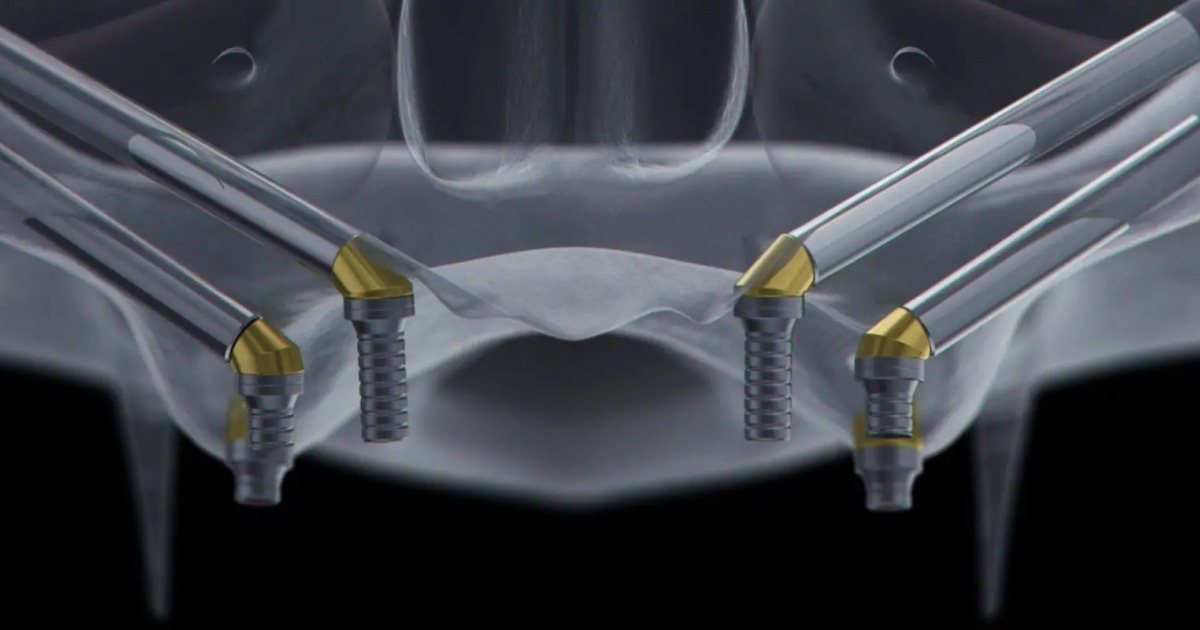
If you have been told that standard dental implants are not possible because your upper jaw has lost too much bone, you have probably already heard the usual options. Sinus lifts. Block bone grafts. Sometimes a year of bone reconstruction before any implant work can start. The truth most UK clinics will not tell you upfront is that there is another path, one that bypasses the bone graft entirely and gives you fixed teeth in days rather than years.
Zygomatic implants anchor into the cheekbone (the zygoma) instead of the resorbed upper jaw. The technique was developed by Per-Ingvar Brånemark in the late 1990s and has now treated over 50,000 patients worldwide. At Dentafly’s Antalya clinic, our Lead Maxillofacial Surgeon Dr. Soner Arikan handles these cases using Nobel Biocare and Straumann zygomatic systems. Treatment costs 70-80% less than UK private clinics, and your follow-up care happens at our London clinic on Church Lane (NW9 8SN). For a wider view of all implant options at Dentafly, see our complete dental implants in Turkey guide.
What Are Zygomatic Implants?
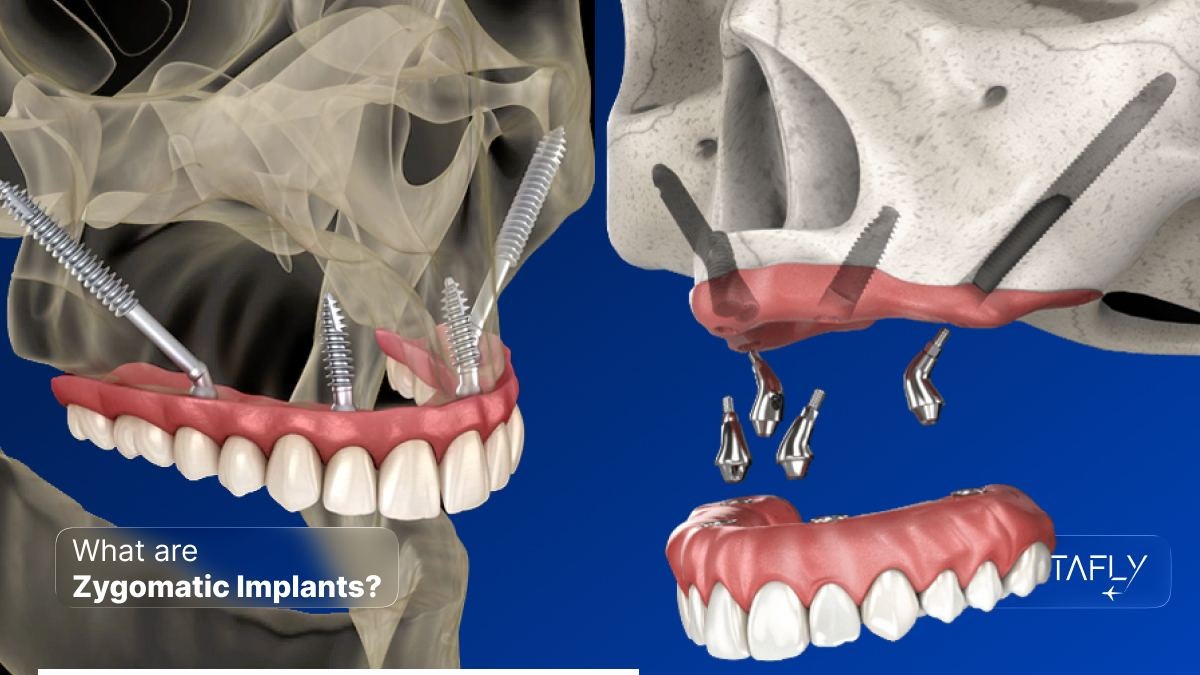
A zygomatic implant is a longer-than-standard titanium fixture, typically 30 to 55 millimeters in length. Standard dental implants measure 8 to 14mm. The extra length allows the implant to pass through the upper jaw and engage the dense bone of the zygoma, the cheekbone you can feel beneath your eye socket. This bone almost never resorbs, even in patients who have worn full dentures for decades.
The original technique was developed by Per-Ingvar Brånemark, the Swedish surgeon who also pioneered modern dental implantology in 1965. He published the first zygomatic implant cases in 1998, initially as a solution for patients who had lost their upper jaw to cancer surgery. Over the past two decades, the indication has expanded to include severe atrophy, failed bone grafts, and complex revision cases.
Modern zygomatic implants come in three principal designs. The original Brånemark zygoma engages the lateral wall of the maxillary sinus. The newer Extra-Sinus approach (developed by Aparicio in 2010) keeps the implant trajectory outside the sinus, reducing sinusitis risk. The Quad Zygoma protocol uses four zygomatic implants when even the front section of the upper jaw lacks bone.
The 2020 systematic review by Aparicio et al, published in Periodontology 2000, analyzed 28 studies covering 5,022 zygomatic implants over 10-year follow-up periods. The pooled cumulative survival rate was 95.2% (95% CI: 93.8-96.4%), with sinusitis occurring in 4.1% of cases as the most common complication.
Who Needs Zygomatic Implants?
Zygomatic implants are not a replacement for standard dental implants. They are a specialized solution for specific clinical situations where conventional approaches will not work. The typical candidate falls into one of these groups.
Long-term denture wearers (10+ years)
Wearing a full upper denture for a decade or more typically reduces the upper jaw to a thin shell of bone. The remaining ridge often measures less than 4mm in height. Even aggressive sinus lifts may not produce enough bone for standard implants. Zygomatic anchorage solves this without further bone work.
Failed sinus lift or bone graft cases
Bone grafting fails in approximately 8-12% of cases, often due to insufficient blood supply or smoking history. Patients who have tried bone augmentation without success face the difficult choice between repeating the procedure or accepting permanent dentures. Zygomatic implants offer a third option.
Oral cancer reconstruction
Patients who have undergone maxillectomy (partial or full removal of the upper jaw) for oral cancer treatment often retain healthy zygomatic bones even when the maxilla is gone. The original Brånemark zygoma cases were exactly these patients, restoring function after radical surgery.
Severe trauma cases
Facial trauma from accidents, particularly when the upper jaw collapses, can leave conventional implant placement impossible. The zygomatic bone, being part of the cranial structure, usually survives such trauma intact.
Failed full-arch implant cases
Patients who have had All-on-4 or All-on-6 fail due to bone loss around standard implants sometimes need rescue with zygomatic anchorage. This salvage approach uses bone the original implants could not reach.
In our Antalya clinic, around 60% of zygomatic patients I see have already been told by UK dentists that they need 12 to 18 months of bone grafting before any implant work can begin. For most of them, that timeline never feels acceptable. Zygomatic implants compress that pathway into a single surgery with same-day teeth. The clinical decision rests on the CBCT findings, but when the indication is right, the difference for the patient is profound.
Lead Maxillofacial Surgeon, Dentafly
Why Zygomatic Surgery Requires Specialist Surgeons
This is the single most important point in the entire guide, and it is also the one most overseas clinics gloss over. Zygomatic implant surgery is fundamentally different from standard implant placement. The implant trajectory passes within millimeters of structures that include the maxillary sinus, the orbital floor, the infraorbital nerve, and the lateral pterygoid plate. A trajectory error of 5 degrees can move the implant tip into the eye socket or through the cheek skin.
For this reason, zygomatic surgery in the United Kingdom is restricted by the General Dental Council to oral and maxillofacial surgeons who hold both a dental degree and a medical degree, plus 5+ years of hospital surgical training. General dentists, however experienced in implantology, are not permitted to perform these surgeries. The same restriction applies in most European countries.
Some Turkish clinics advertise zygomatic implants without making this distinction clear. They may use the title “implantologist” or “implant specialist” without disclosing whether the surgeon is actually a registered maxillofacial specialist. At Dentafly, every zygomatic case is performed by Dr. Soner Arikan, our Lead Maxillofacial Surgeon, who completed his hospital surgical residency in Turkey with international fellowship training in zygomatic protocols. We do not delegate these cases to general implantologists.
The Zygomatic Implant Procedure (Step-by-Step)
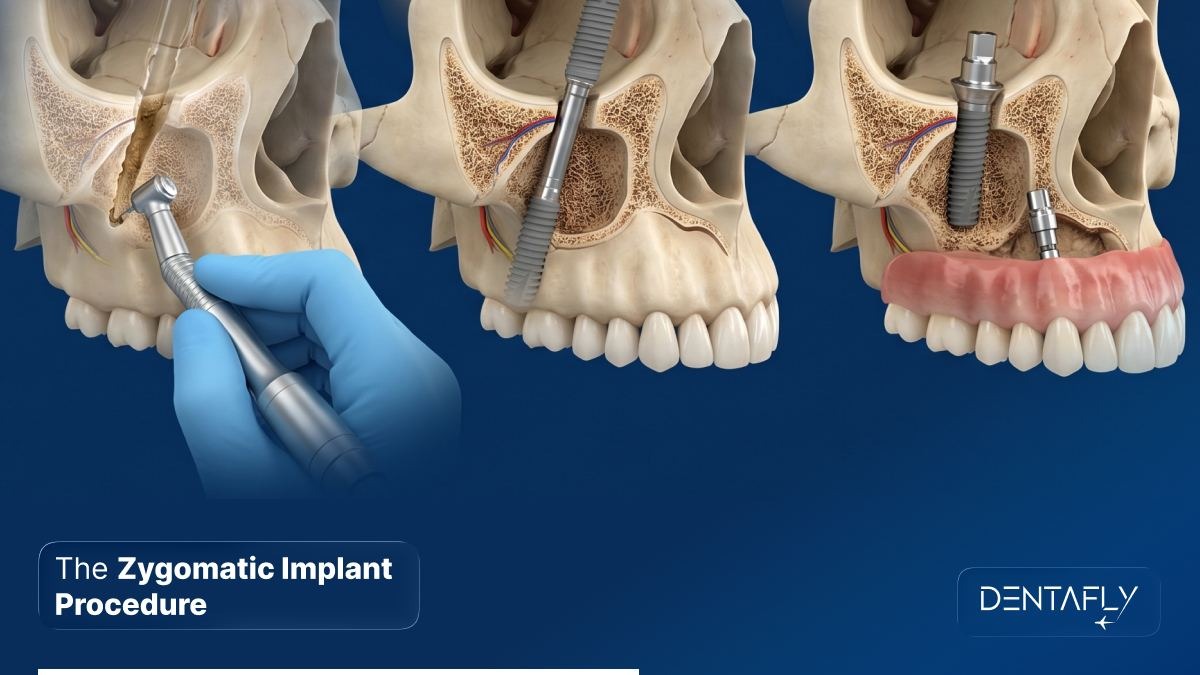
Stage 1: Pre-surgical assessment (Day 1)
The visit begins with a full medical evaluation, blood pressure check, and detailed CBCT scan covering the entire facial skeleton. We measure zygomatic bone density and dimensions in three planes, assess sinus anatomy, and identify the position of the infraorbital nerve. The treatment plan is then designed using virtual planning software (typically NobelClinician or DTX Studio).
Stage 2: Surgical placement (Day 2)
Surgery happens under IV sedation combined with local anesthesia. The procedure begins with a crestal incision along the upper ridge. A flap is reflected to expose the lateral wall of the maxilla and the body of the zygoma. The implant osteotomy is prepared with a sequence of progressively wider drills, following the planned trajectory toward the cheekbone. The zygomatic implant is then torqued into place. We measure primary stability using torque values, looking for above 35 N·cm to permit immediate loading. Total surgery time per arch is 2-4 hours.
Stage 3: Immediate temporary bridge (Day 2-3, same visit)
Within 24 hours of surgery, a fixed temporary bridge is placed onto the implants. This is screwed in (not cemented) for easy removal during follow-ups. You leave Antalya with functional teeth, not gums. The temporary is typically a CAD/CAM milled acrylic bridge designed in our in-house lab.
Stage 4: Healing (4-6 months in UK)
The implants need 4-6 months to integrate with the zygomatic bone. During this period you wear the temporary bridge full-time. Most patients find this period much more comfortable than expected since you have fixed teeth throughout. Post-op checks happen at our London clinic at NW9 8SN.
Stage 5: Final zirconia bridge (Second visit, 5-7 days)
Once integration is confirmed by CBCT, you return to Antalya for digital impressions. Our digital lab produces a final zirconia or hybrid acrylic bridge over the next 4-5 days, with fittings and adjustments. Final cement-retained or screw-retained prosthesis is placed before you fly home.
The diagnostic phase often gets undervalued in zygomatic cases. I spend more time on the CBCT analysis than on the surgery itself. The zygoma anatomy varies considerably between patients. The angle of the bone, the thickness, the relationship to the sinus floor and orbital rim, all of this changes the planned trajectory. When the planning is right, the surgery itself is methodical and predictable. When the planning is rushed, complications follow.
Implantology & Periodontology Ph.D., Dentafly
Zygomatic Implant Cost: UK vs Turkey vs USA
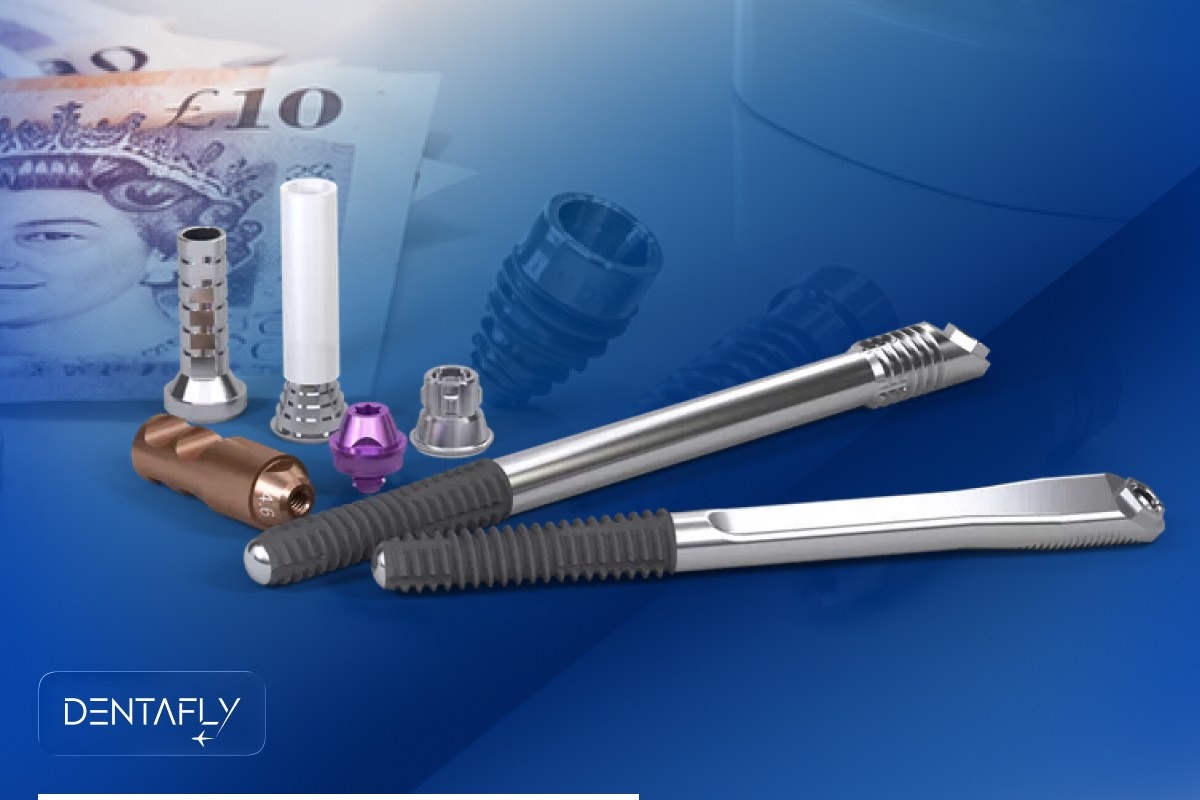
Zygomatic surgery prices in the UK typically reflect the maxillofacial specialist fee, which is substantially higher than standard implant placement. Most UK clinics outsource zygomatic cases to private hospital theaters, adding facility fees. The total package cost is significantly higher than All-on-4 or All-on-6.
| Treatment Protocol | UK Private (Avg) | USA Private (Avg) | Dentafly Turkey | Your Savings |
|---|---|---|---|---|
| Single Zygomatic Implant | £8,000-£12,000 | $15,000-$22,000 | £2,500-£4,000 | up to 70% |
| Zygoma Hybrid (2 zygo + 2 standard) | £15,000-£22,000 | $25,000-$35,000 | £6,500-£8,500 | up to 65% |
| Quad Zygoma (4 zygomatic implants) | £24,000-£35,000 | $40,000-$60,000 | £8,500-£11,000 | up to 70% |
| Final Zirconia Bridge | £4,000-£6,000 | $8,000-$12,000 | Included | 100% |
| 3D CBCT Planning | £300-£500 | $500-$800 | Included | 100% |
| Hospital Theater Fees | £2,000-£4,000 | $5,000-$8,000 | Included | 100% |
Dentafly’s all-inclusive package adds 5-star hotel accommodation in Antalya, VIP airport transfers, all medications and antibiotics, IV sedation fees, and UK aftercare follow-ups in London. None of these are charged separately. For broader implant pricing context, see our dental implants cost guide.
The cost gap is wider for zygomatic procedures than for standard implants because UK maxillofacial specialist fees represent a much larger portion of the total bill. In Turkey, the same level of specialist expertise costs less due to lower healthcare overhead in general.
Same-Day Teeth With Zygomatic Implants
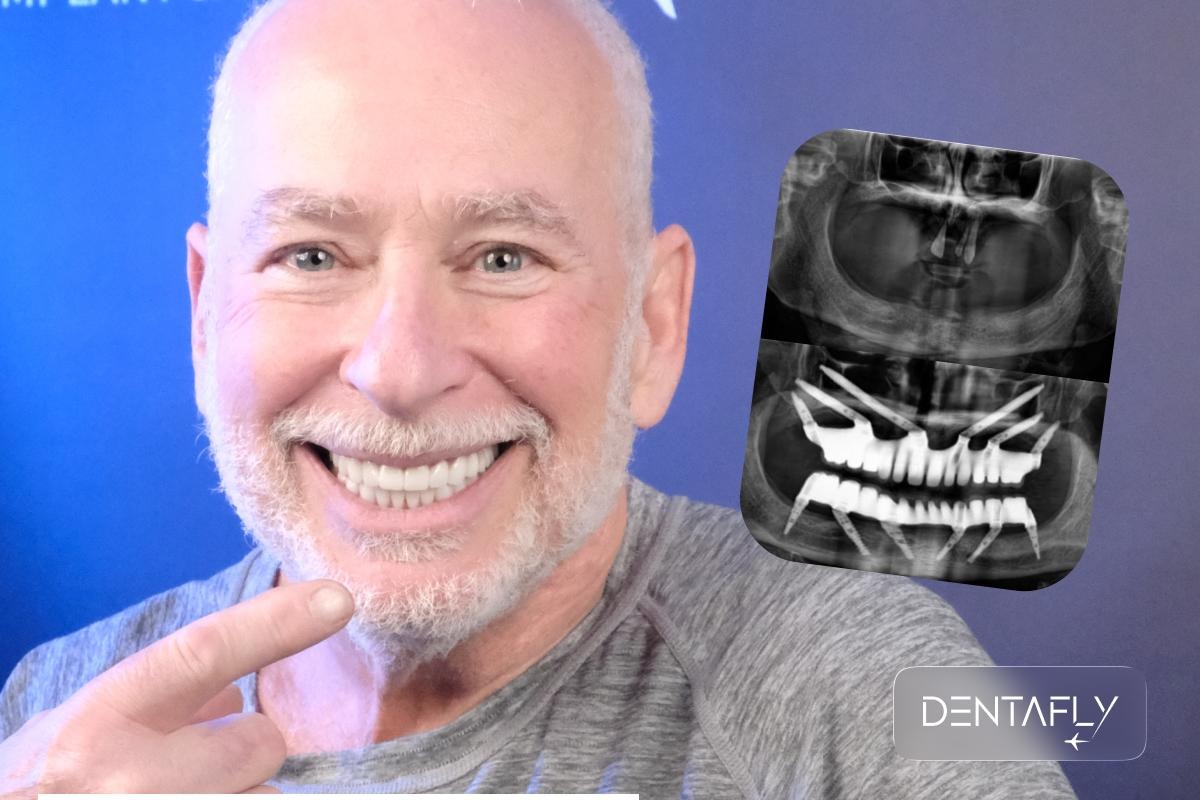
One of the principal reasons zygomatic implants matter to patients is the same-day-teeth protocol. Standard implants in poor bone require 4-6 months of healing before any teeth can be loaded onto them. With zygomatic anchorage in dense cheekbone, immediate loading is possible in 95% of cases.
The protocol works like this. Surgery completes by mid-afternoon on Day 2. The implants are tested for primary stability immediately after placement. If stability exceeds 35 N·cm of insertion torque (which is the typical finding), digital impressions are taken the same evening. Our in-house digital lab works overnight to produce a CAD/CAM milled temporary bridge from a single block of acrylic. The bridge is fitted on Day 3, just 24-36 hours after surgery.
The immediate-loading bridge is not cosmetic-grade ceramic. It is a functional, screw-retained acrylic prosthesis designed for the 4-6 month healing period. It looks natural and functions for chewing soft to medium foods. Once integration is confirmed, the temporary is replaced with the final zirconia or hybrid bridge during your second visit.
Zygomatic Implants vs Bone Grafting: Which Is Right for You?
| Factor | Bone Grafting + Standard Implants | Zygomatic Implants |
|---|---|---|
| Total treatment time | 12-18 months | 4-6 months |
| Number of surgeries | 2-3 (graft + implant + crown) | 1 (single surgery) |
| Donor site needed? | Often (block graft from chin or hip) | No |
| Risk of graft failure | 8-12% | N/A |
| Same-day teeth possible? | No (must heal first) | Yes (95% of cases) |
| Total cost (UK private) | £18,000-£28,000 | £15,000-£22,000 |
| Total cost (Dentafly) | £5,500-£8,000 | £6,500-£8,500 |
| 10-year survival | 92-95% | 95.2% |
| Best for | Moderate bone loss, time-flexible patients | Severe bone loss, time-pressured cases |
The decision between bone grafting and zygomatic implants depends on the severity of bone loss, your timeline preferences, and your medical history. Patients with diabetes, smokers, or those with previously failed bone grafts often do better with zygomatic anchorage because it does not depend on regenerating new bone. Younger patients with moderate bone loss may prefer the more conservative graft route. The CBCT scan and case discussion with Dr. Arikan will identify the right path for your specific situation. For more on bone graft options, see our bone grafting in Turkey guide.
For US Patients: Medicare Coverage and Cost Reality
American patients facing zygomatic implant needs encounter the same insurance gap as their UK counterparts, but with even higher private-sector costs. Original Medicare excludes zygomatic implants entirely. The Centers for Medicare and Medicaid Services classifies these procedures as cosmetic dental work, despite their reconstructive nature for cancer survivors and trauma patients.
The narrow Medicare exception
Original Medicare may cover zygomatic implant placement when it directly relates to a covered medical procedure: post-cancer maxillectomy reconstruction, severe facial trauma reconstruction, or certain congenital conditions. Even in these cases, coverage typically applies to surgical fees only, not to the prosthesis or follow-up care.
Medicare Advantage limits
Most Medicare Advantage (Part C) plans cap annual dental benefits between $1,300 and $2,000. Given that a single zygomatic implant in the US costs $15,000 to $22,000, and a full Quad Zygoma protocol can reach $40,000 to $60,000, this coverage barely scratches the surface of total expense. Some premium Advantage plans offer “extensive dental” riders with $3,000-$5,000 annual maximums, which still falls dramatically short.
Medicaid coverage
State Medicaid programs almost universally exclude zygomatic implants for adults, classifying them as elective. The few states that may cover the procedure (California, Ohio, West Virginia) require strict medical necessity documentation and apply annual benefit caps that do not approach the actual cost.
Why US patients increasingly choose Turkey
For an American patient needing Quad Zygoma treatment, the math typically works as follows. Total Dentafly cost (surgery, prosthesis, hotel, transfers, two trips): approximately $11,500-$14,000. US private quote for the same protocol: $40,000-$60,000. Even after factoring in two round-trip flights from major US cities to Antalya (typically $1,400-$2,200 total) and 10-12 nights of hotel beyond the included stay, the savings exceed $25,000 in most cases.
Sources: Medicare.gov dental services policy 2026; American Academy of Implant Dentistry (AAID) cost data; Centers for Medicare and Medicaid Services non-covered services classification; American Dental Association 2024 Survey of Dental Fees.
Real UK Patient Stories
“Wore upper dentures for twenty-two years. Three different UK clinics told me I needed full bone grafting before any implant work. Quotes ranged from £24,000 to £32,000 with eighteen months of healing. Found Dentafly through a friend, flew to Antalya in March, walked out with fixed temporary teeth on the third day. Total cost: £7,200. The London clinic at Church Lane handled all my checks afterward.”
“Had a sinus lift fail in 2023, the bone graft never integrated properly. UK private quoted me £28,000 to try again with a different graft technique, no guarantee of success. Dr. Arikan at Dentafly suggested zygomatic implants instead, said it bypasses the bone problem entirely. Surgery took three hours, sedation, no pain afterward. Six months on I have a permanent zirconia bridge.”
“Lost my upper teeth and most of my upper jaw to oral cancer surgery in 2021. The NHS reconstruction was due to take another two years on the waiting list. Dentafly handled my Quad Zygoma in two visits over five months. The maxillofacial qualification of Dr. Arikan was the deciding factor for me, I needed someone who understood post-cancer anatomy. Cost: £10,800.”
“Sixty-eight, terrified of dental work, but my dentures had become unwearable. The thought of fifteen months of bone grafting at my age was unbearable. Dentafly’s zygomatic protocol meant a single surgery and fixed teeth in three days. The IV sedation made the procedure itself a non-event. AACI accreditation and Dr. Arikan’s hospital training reassured my husband and son before we travelled.”
“Coming from Houston, I had two US quotes for Quad Zygoma: $52,000 and $48,000. My Medicare Advantage plan covered $1,800. Dentafly’s package came to $13,200 all-in including flights and hotel for both trips. The crown fitting on the second visit produced a result indistinguishable from natural teeth. Half a year later, no complications, eating everything.”
UK Aftercare for Zygomatic Patients
Aftercare matters more for zygomatic implants than for any other dental procedure. The reasons are mechanical: zygomatic implants engage non-dental bone, sit at unusual angles, and carry occlusal loads that demand careful monitoring during the first year. Most overseas clinics leave this monitoring to your local UK dentist, who is unlikely to have specific experience with zygomatic systems.
Dentafly’s London clinic at 230 Church Lane, NW9 8SN handles every follow-up step on UK soil. Week 1 post-op review covers suture removal if needed and initial healing assessment. Month 1, 3, and 6 reviews include digital X-rays to monitor osseointegration progress. The Month 6 visit transitions you from temporary to final prosthesis planning. Annual maintenance from Year 2 onward includes hygiene support, occlusion checks, and prosthesis assessment.
If anything feels unusual between scheduled visits, our UK coordinator arranges an appointment within 48 hours. Lifetime warranty claims (which cover both the implant and the final bridge for life) are processed entirely through the London clinic, with no return travel to Turkey required. This level of UK-based aftercare is unmatched among Turkish dental clinics.
Frequently Asked Questions
What is a zygomatic implant?
How much do zygomatic implants cost in Turkey?
Who needs zygomatic implants?
Are zygomatic implants safe?
Can I get teeth on the same day with zygomatic implants?
Does Medicare cover zygomatic implants in the USA?
How long does the procedure take?
How many days do I need to be in Turkey?
What is the difference between zygomatic implants and All-on-4?
Can zygomatic implants fail?
Will I feel anything during surgery?
What aftercare do I get back in the UK?
References & Studies
- Aparicio C, Manresa C, Francisco K, et al. (2020): “Zygomatic implants: indications, techniques and outcomes, and the Zygomatic Success Code.” Periodontology 2000, 84(1), 263-279. 10-year systematic review covering 5,022 implants.
- Brånemark P-I, Gröndahl K, Öhrnell L-O, et al. (2004): “Zygoma fixture in the management of advanced atrophy of the maxilla: technique and long-term results.” Original protocol publication.
- Davó R, Pons O. (2013): “5-year outcome of cross-arch prostheses supported by four immediately loaded zygomatic implants.” European Journal of Oral Implantology, 6(3), 263-269.
- American Dental Association (2024): Survey of Dental Fees, including zygomatic implant pricing.
- NHS England: Restorative Dentistry-UK 2019 guidelines on implant funding eligibility.
- AACI Accreditation: Program Number C477-2025-MSC-TR (valid through 16 November 2028).
- ISO 9001:2015: Quality Management Systems Certification.
- Centers for Medicare and Medicaid Services: Non-Covered Dental Services Classification, 2026.
Related Reading
- Complete Dental Implants in Turkey Guide: Pillar overview of all implant types
- Dental Implant Costs in Turkey: Full pricing breakdown
- All-on-4 Dental Implants: Standard full-arch alternative
- All-on-6 Dental Implants: Maximum-stability alternative
- Bone Grafting in Turkey: Conventional alternative for moderate bone loss
- Sinus Lift in Turkey: When sinus augmentation is needed
- Single Tooth Implants: Simpler implant cases
- NHS Dental Implant Alternative: Why UK patients choose Turkey
- Meet Dr. Soner Arikan: Lead Maxillofacial Surgeon credentials
- Free X-Ray Review: Get a personalised treatment plan
Severe Bone Loss? Get Your Zygomatic Assessment
Send us your CBCT scan or panoramic X-ray for a full evaluation by our maxillofacial team. Free assessment, transparent pricing, UK aftercare included with every treatment.