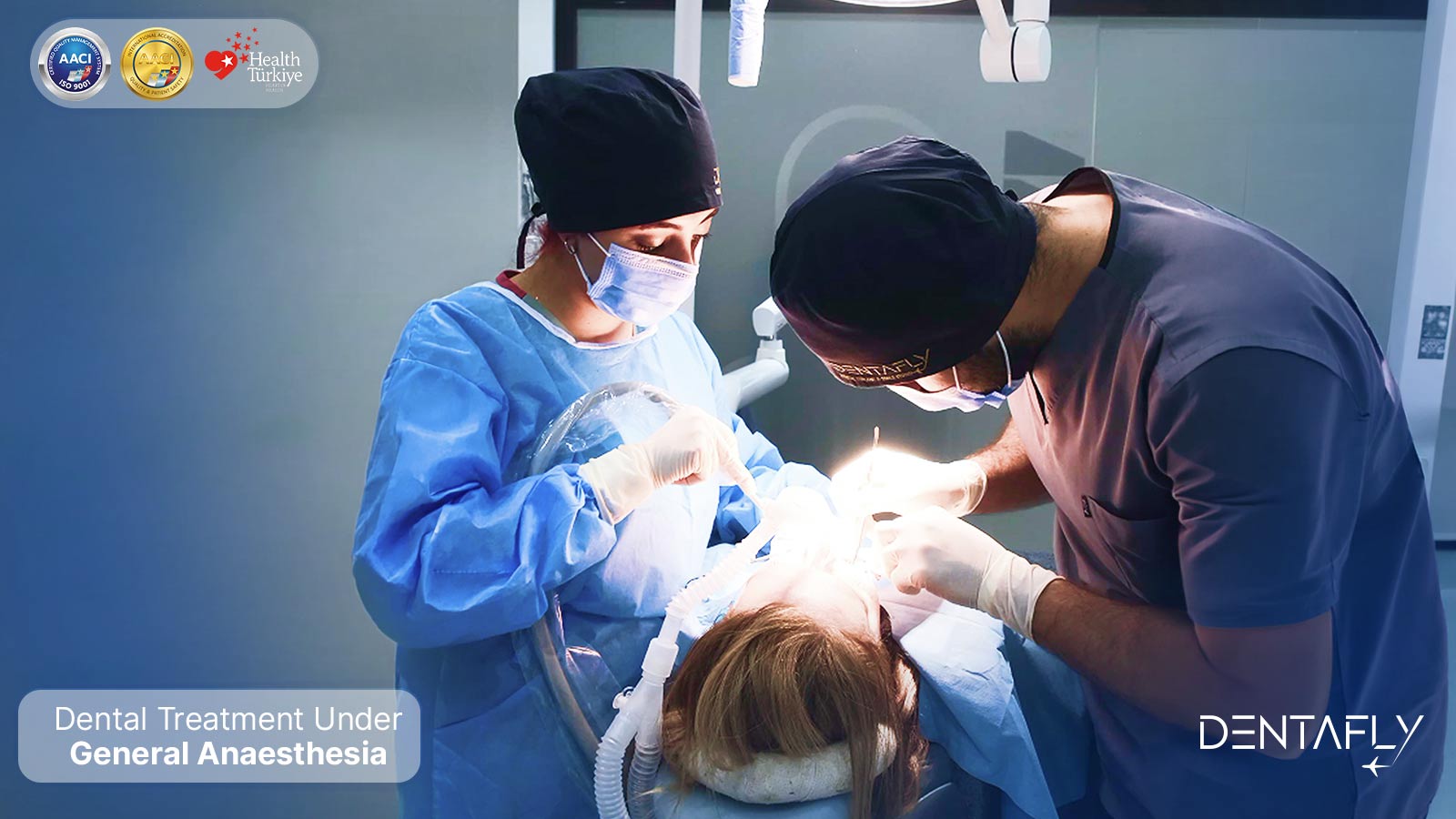
For complex full-mouth restorations, extensive implant surgery, or patients who cannot tolerate awake dental procedures, general anaesthesia dental treatment offers a controlled, medically supervised alternative. At Dentafly Antalya, general anaesthesia dentistry is performed in a hospital-standard operating environment by qualified anaesthetists working alongside our surgical team, with full UK aftercare at our London NW9 8SN clinic.
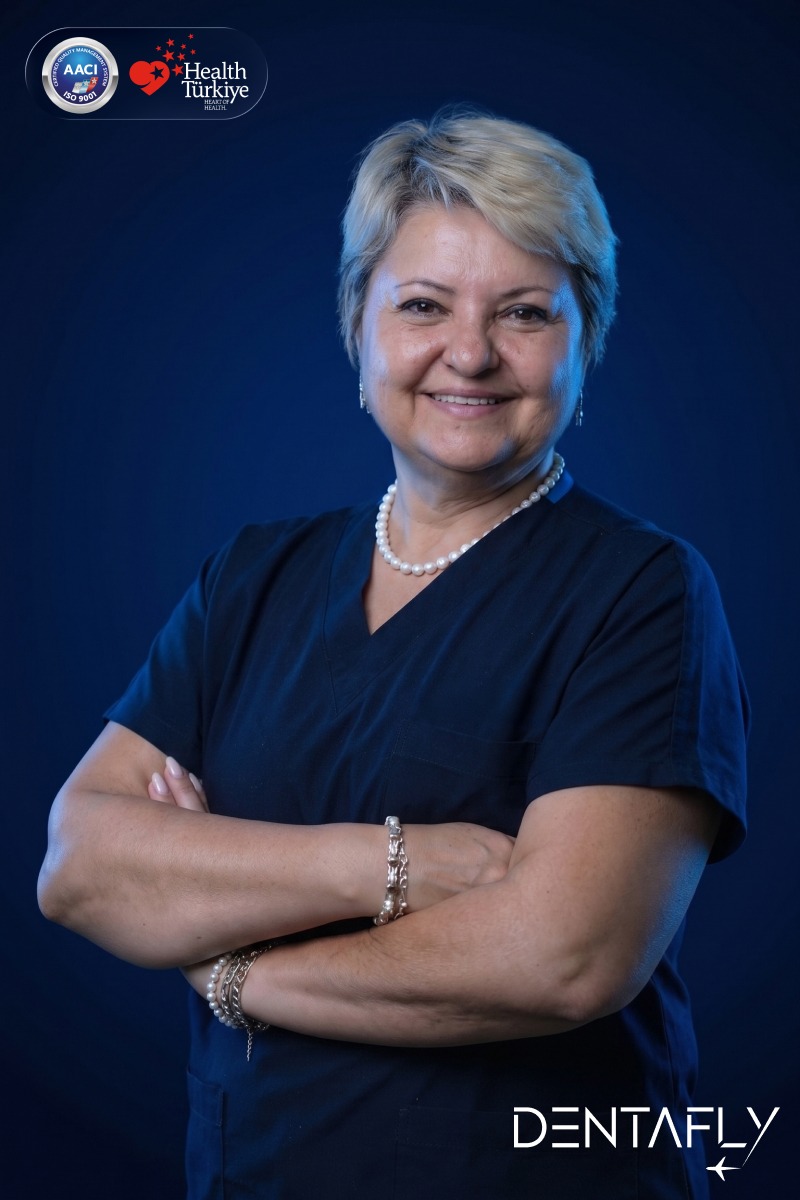
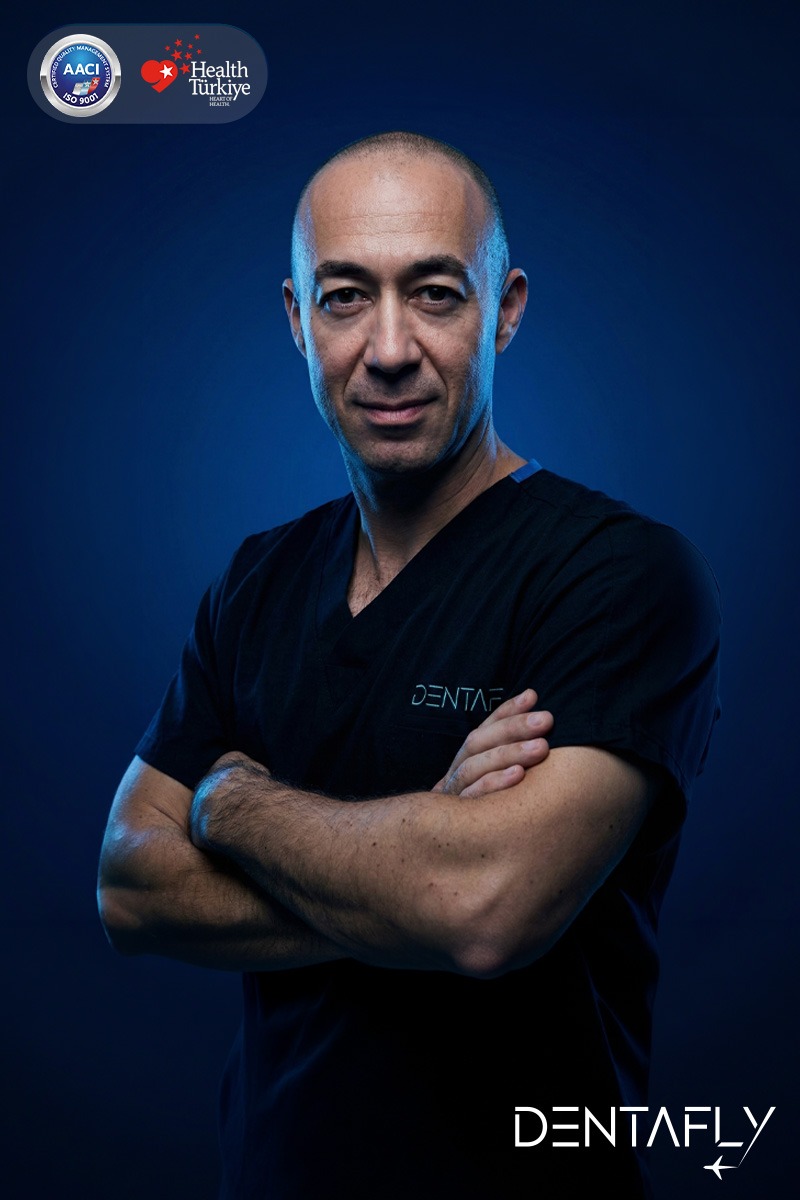
This guide covers when general anaesthesia is medically indicated, how it compares to the three other sedation options, the four-stage Dentafly protocol, cost breakdown against UK private hospitals, and the structured London NW9 aftercare that follows your trip home. The medical content is written by our anaesthesia specialist Anesth. Huru Zan and clinically reviewed by Dr. Burak Gökdeniz, our Head Dentist. For the broader implant context, see our dental implants Turkey pillar guide.
When General Anaesthesia Is Medically Indicated
General anaesthesia is chosen when clinical circumstances make awake treatment impractical, unsafe, or impossible. It is not a default option and it is not selected for convenience alone. Clinical evidence identifies several patient categories where it becomes the appropriate choice:
- Extensive full-arch surgery: All-on-4, All-on-6, and full-mouth extraction combined with immediate implant placement often exceed three hours of active surgical time, making awake tolerance difficult.
- Combined multi-quadrant treatment: Patients travelling internationally who need extractions, bone grafting, sinus lift, and implants completed within a compressed schedule benefit from consolidating procedures into a single session.
- Complex surgical anatomy: Cases involving zygomatic implants, extensive bone augmentation, or maxillofacial reconstruction where surgical precision requires the patient to remain completely still.
- Patients with special healthcare needs: Adults or children with intellectual disabilities, autism spectrum conditions, or neurological disorders that prevent sustained cooperation during dental procedures.
- Severe medical contraindications to awake procedures: Certain systemic conditions where the physical and cardiovascular strain of prolonged awake treatment exceeds the risk of controlled anaesthesia.
- Strong gag reflex: Patients whose gag reflex prevents impression-taking, imaging, or intraoral work under conventional local anaesthesia.
Comparing the Four Dental Anaesthesia Options
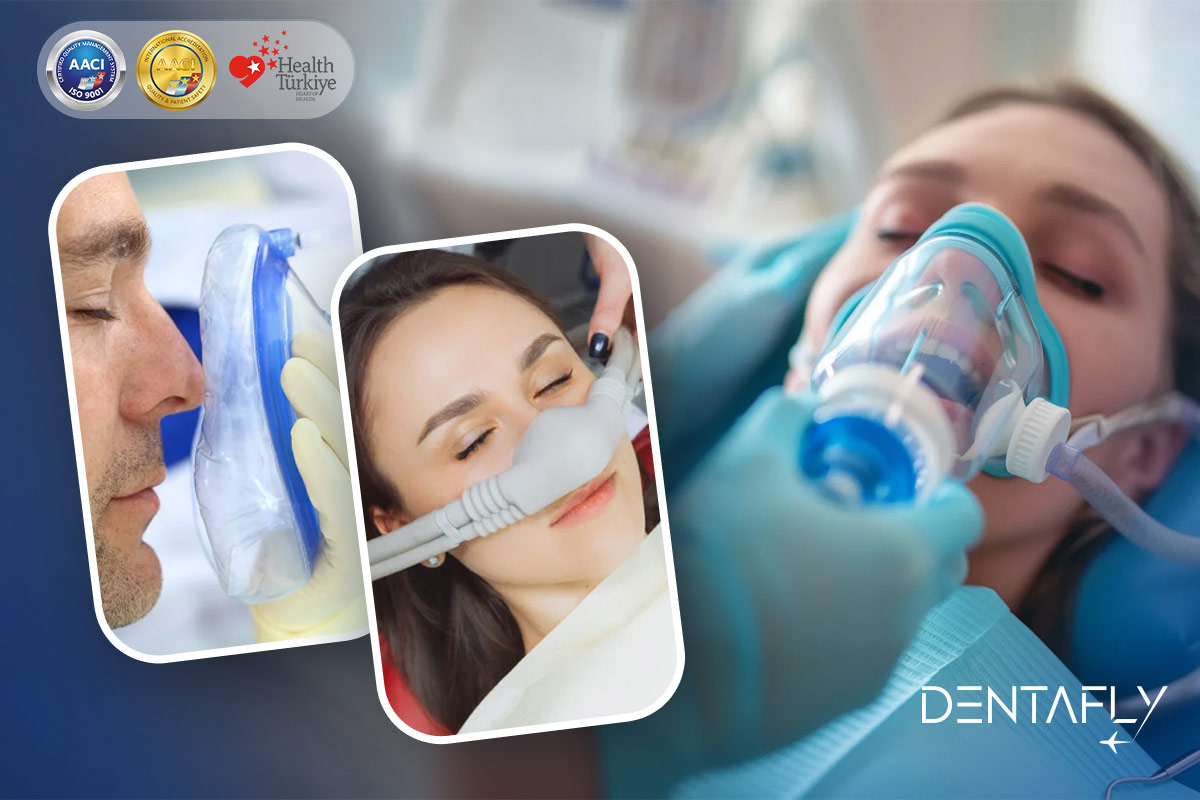
Modern dentistry offers a graduated spectrum of pain and awareness control. Selecting the appropriate option depends on procedure complexity, patient tolerance, medical history, and treatment goals. Anaesth. Huru Zan and the Dentafly surgical team assess each case individually before recommending a specific approach.
| Type | Consciousness | Typical Use | Recovery | Anaesthetist |
|---|---|---|---|---|
| Local anaesthesia | Fully awake, aware | Single-tooth work, fillings, routine extractions, single-implant placement | Immediate | No |
| Nitrous oxide (minimal sedation) | Awake, deeply relaxed | Patients requiring extra comfort support, longer routine work, mild dental discomfort | 5-10 minutes | No |
| IV sedation (moderate to deep) | Semi-conscious, drowsy, minimal memory | Longer surgical sessions, moderate complexity, sinus lift, multiple implants | 1-2 hours | Yes |
| General anaesthesia | Fully unconscious | Full-arch surgery, complex reconstruction, special healthcare needs, severe gag reflex | 4-24 hours to normal activity | Yes (qualified) |
Local anaesthesia: the routine standard
Injected articaine or lidocaine numbs a specific mouth area. The patient remains fully conscious and communicative. This is the standard of care for approximately 90% of dental work, including fillings, single crowns, routine extractions, and single implant placements.
Nitrous oxide: the middle ground
Delivered via nasal mask, nitrous oxide (laughing gas) produces conscious relaxation. Patients remain responsive but experience reduced awareness of discomfort. Effects dissipate 5-10 minutes after stopping delivery, and patients can drive themselves home.
IV sedation: for extended or complex sessions
Intravenous medications produce moderate to deep sedation depending on dose. Patients breathe independently and respond to verbal cues but retain little memory. This option requires a qualified anaesthetist and continuous monitoring. Recovery takes 1-2 hours before discharge.
General anaesthesia: full unconsciousness
Complete loss of consciousness is induced through IV drugs, inhaled agents, or a combination. The patient cannot feel pain, respond to stimuli, or form memory of the procedure. Airway support and continuous cardiovascular monitoring are provided by the anaesthetist throughout the session.
The Dentafly General Anaesthesia Process
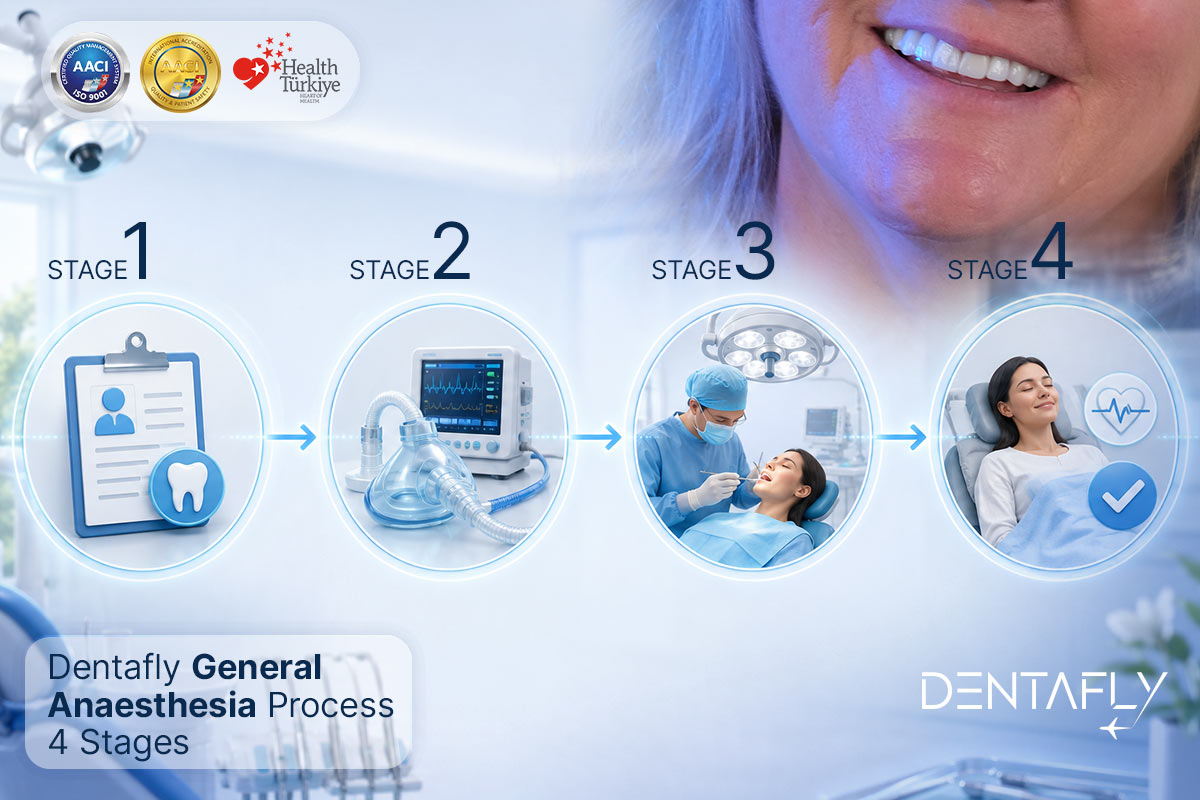
General anaesthesia at Dentafly follows a structured protocol from pre-operative assessment to same-day recovery monitoring. Each stage is conducted in a hospital-standard facility with dedicated anaesthesia-equipped surgical rooms.
Stage 1: Pre-operative medical assessment
Every patient scheduled for treatment under general anaesthesia undergoes a comprehensive pre-operative evaluation. Specifically, this includes:
- Complete medical history review, including current medications, allergies, and previous anaesthesia experiences
- Blood tests: full blood count, coagulation profile, biochemistry panel, blood glucose
- ECG for patients over 50 or with cardiovascular history
- Chest X-ray if respiratory conditions are present
- Assessment of airway anatomy (Mallampati classification)
For patients receiving dental treatment under general anaesthesia at our clinic, all pre-operative testing is conducted by our in-house medical personnel, and patients are monitored throughout the entire day. This continuous supervision distinguishes hospital-standard dental anaesthesia from clinic-level sedation, which is why full-arch surgical patients benefit from the additional safety layer.
Stage 2: The anaesthesia consultation
Anaesth. Huru Zan reviews the patient’s results, confirms fitness for general anaesthesia, and discusses the technique to be used. This consultation addresses any medications that must be paused, fasting requirements (typically no food for 6 hours, no clear fluids for 2 hours before), and post-operative expectations.
Stage 3: The procedure
On the day of treatment, induction typically begins with intravenous propofol or an equivalent agent, often combined with a short-acting opioid for analgesia. Anaesthesia is maintained with inhaled agents (sevoflurane) or continuous IV infusion, depending on procedure length. Vital signs including heart rate, blood pressure, oxygen saturation, and end-tidal carbon dioxide are monitored continuously.
The dental team performs the planned surgery while the anaesthetist manages the airway and physiological parameters. A typical general anaesthesia dental session lasts 2-4 hours, though complex full-mouth reconstruction can extend to 6 hours.
Stage 4: Post-anaesthesia recovery
After the procedure, patients are transferred to a recovery area where the anaesthetist and nursing team monitor vital signs, pain, and consciousness. Initial recovery takes 1-2 hours. Patients are discharged to their hotel or accommodation with a companion once discharge criteria are met: stable vitals, adequate pain control, ability to tolerate fluids, and clear cognitive response.
Safety, Screening, and Who Is Not Suitable
General anaesthesia is safe when properly administered in an appropriate facility, but it carries risks that make careful patient selection essential. Published research on anaesthesia in dental treatments indicates that high-risk patients, those with significant comorbidities or complex medical histories, experience anaesthesia-related complications at rates of 20-30% (Ohnishi et al., 2025). This is why comprehensive pre-operative screening is not optional.
Patients who may not be suitable
Certain conditions require either alternative sedation methods or hospital-based anaesthesia rather than clinic-based delivery:
- Uncontrolled cardiovascular disease (recent myocardial infarction, unstable angina, severe heart failure)
- Uncontrolled respiratory conditions (severe asthma, advanced COPD)
- Recent stroke (within 6 months)
- ASA Physical Status Classification IV or V
- Severe untreated obstructive sleep apnoea without CPAP
- Significant coagulation disorders without appropriate management
- Certain medications that cannot be safely interrupted
What to expect after the procedure
Common short-term effects that resolve within 24 hours include mild sore throat (from airway management), fatigue, transient nausea, and short-term memory of the procedure being absent. Serious adverse events are rare when patients are appropriately screened and anaesthesia is delivered in a properly equipped facility with qualified staff.
Cost Breakdown: Turkey vs UK
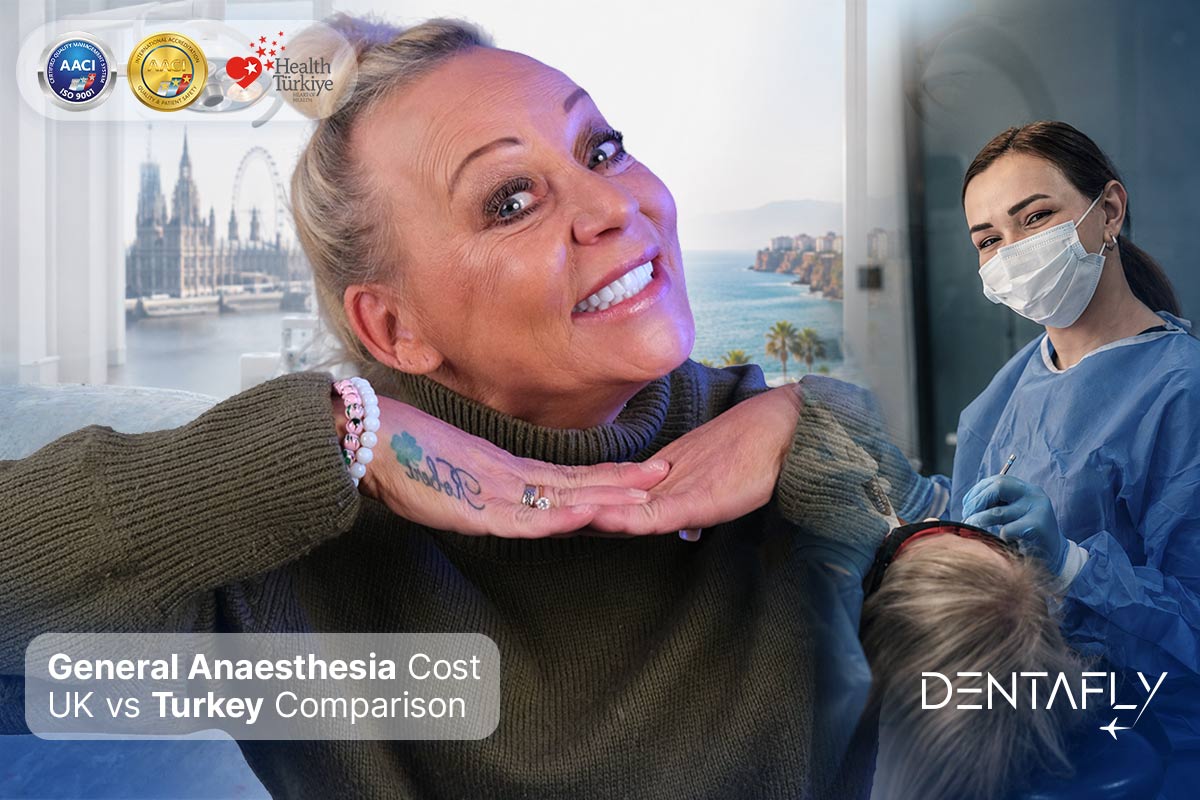
UK patients frequently ask about the cost gap between UK private hospital anaesthesia and equivalent treatment in Turkey. Private hospital anaesthetist fees alone often exceed £1,200 per session before the dental procedure is charged. The itemised comparison below assumes the same scope of pre-operative testing, theatre use, and recovery monitoring at both ends.
| Component | UK Private Hospital | Dentafly Antalya |
|---|---|---|
| General anaesthesia (anaesthetist + monitoring) | £1,800 – £3,200 per session | £550 – £950 per session |
| Pre-operative bloods + ECG | £350 – £600 | Included |
| Operating theatre use | £600 – £1,200/hour | Included |
| Recovery room monitoring | £280 – £450 | Included |
| Total anaesthesia cost (before dentistry) | £3,030 – £5,450 | £550 – £950 |
Combined all-on-4 packages at Dentafly (including anaesthesia, pre-op testing, surgery, temporary teeth, and UK aftercare) typically range £6,800-£9,200, compared with £22,000-£34,000 in UK private hospitals.
Flexible Dental Finance from £60.72/mo
UK patients can spread the cost of treatment involving general anaesthesia across 6-60 months using our partner dental finance providers. Structured payment plans below are designed for treatments above £1,500 and include no-deposit arrangements for credit-approved applicants.



Zirconium Crowns 10 Upper 10 Bottom
Zirconium Crowns 10+10
Apply for Dental Finance
e-max Veneers 8+8
e-max Veneers 8+8
Apply for Dental Finance
All-on-4 Cad/Cam
Apply for Dental Finance
All-on-6 Cad/Cam
Apply for Dental Finance
Composite Bonding 10+10
Apply for Dental Finance
Get Your Itemised Quote
Send us your dental history and any concerns about awake procedures. We’ll return a personalised quote in pounds sterling within 24 hours, including whether general anaesthesia is medically appropriate for your case.
Get Your Free QuoteRecovery, Discharge, and UK Aftercare
Recovery from general anaesthesia follows a predictable trajectory when patients are properly screened and the procedure is uncomplicated. Understanding the timeline helps you plan your Antalya trip and return travel with confidence.
The first 24 hours
Patients rest in the recovery area for 1-2 hours before discharge with a companion. Dentafly arranges companion support for solo travellers. By the following morning, most patients feel largely recovered, with cognitive function normal within 12-24 hours.
The Antalya recovery period
For extensive procedures, we recommend remaining in Antalya 5-10 days post-surgery for initial healing assessment and adjustments before flying home.
UK aftercare at London NW9 8SN
Once patients return to the UK, follow-up appointments (check-ups at 3 months, 6 months, and annually thereafter) are conducted at our London NW9 8SN aftercare clinic. This eliminates the need to fly back to Antalya for routine monitoring, warranty enforcement, or minor adjustments. For details of the full programme see our UK aftercare at London NW9 8SN guide.
Patient Story: Kevin’s Journey
Kevin, a UK patient who had avoided dental care for over a decade, needed extensive extractions and full-arch implant placement. The prospect of completing this awake, even under IV sedation, was not tolerable for him. General anaesthesia allowed the entire surgical phase to be completed in a single session.
Kevin’s case illustrates the structured process supporting each general anaesthesia patient at Dentafly, from pre-operative planning through multi-month recovery.
Verified Reviews from International Patients
Verified reviews from patients treated at Dentafly Antalya, including cases involving general anaesthesia and full-arch surgery. Reviews are collected through Trustpilot’s independent verification system.
UK Aftercare at London NW9 8SN
Dentafly’s UK aftercare clinic at London NW9 8SN provides post-treatment monitoring, warranty enforcement, and clinical follow-up for all patients treated in Antalya, including those whose surgery involved general anaesthesia. The clinic is led by Dt. Merve Sezer Topcu, our UK Aftercare coordinator, with escalation to senior specialists when required.
All UK-based clinical work is performed by GDC-registered clinicians. Public transport access via Colindale (Northern Line) and Hendon Central.
- 📍 230 Church Lane, London NW9 8SN
- 📞 +44 7462 172110
- ✉️ [email protected]
- 🕐 Mon-Fri 9:00-18:00, Sat 10:00-17:00
- 🚇 12 min from Colindale (Northern Line)
- 🚗 8 min from M1 Junction 2, free parking on-site