“Turkey teeth” is the UK nickname for cosmetic dental work done in Turkey, most often a full set of crowns or veneers, and increasingly implants and All-on-4 treatment. The phrase carries two meanings at once: for hundreds of thousands of patients it simply means high-quality dentistry at 60-70% below UK private fees, while in the British press it has become shorthand for treatment that went wrong at unverifiable clinics. Both realities exist. This guide explains what the treatments actually involve, why some cases go wrong, how to verify a clinic properly, and what your options are if you already have work you regret. It also tells the story of Jack Fincham, who chose DentaFly to redo previous work he was unhappy with. If you would rather see results than read about them, start with our turkey teeth before and after gallery, where every case was completed at our own Antalya clinic and reviewed afterwards in London.
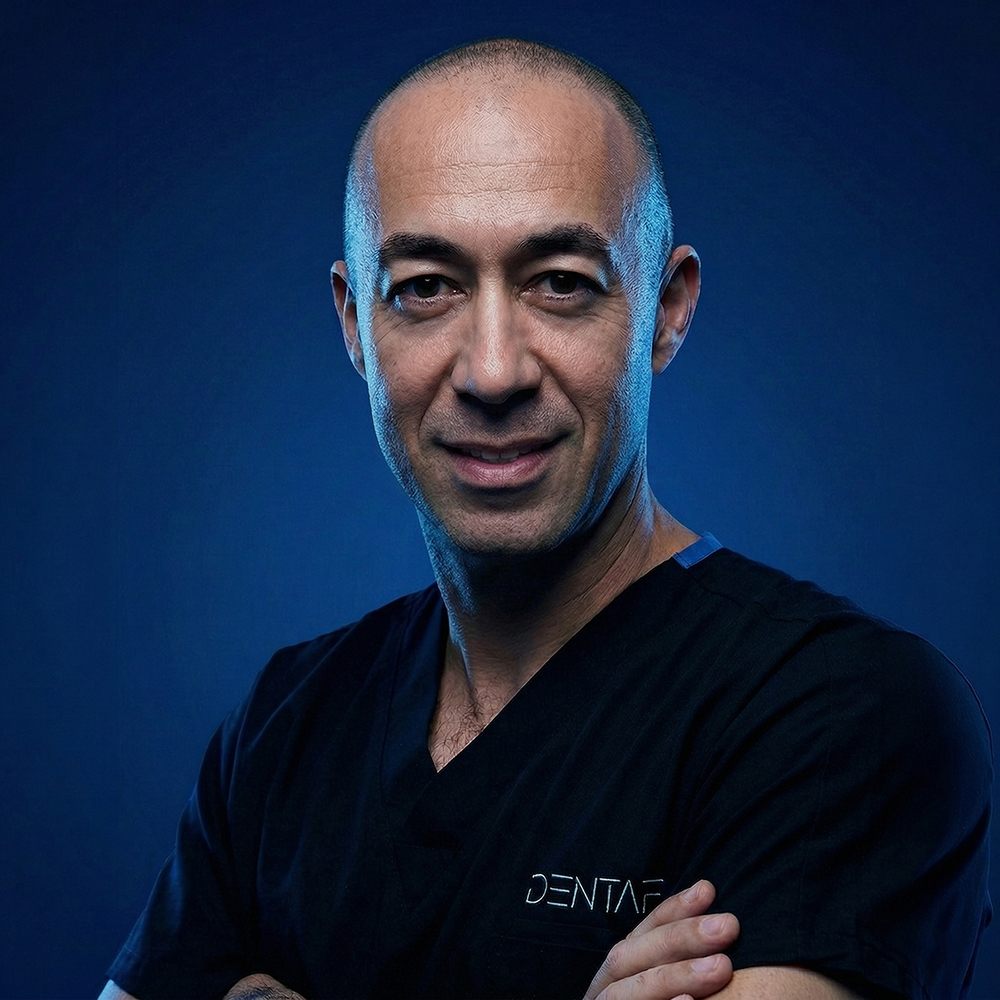
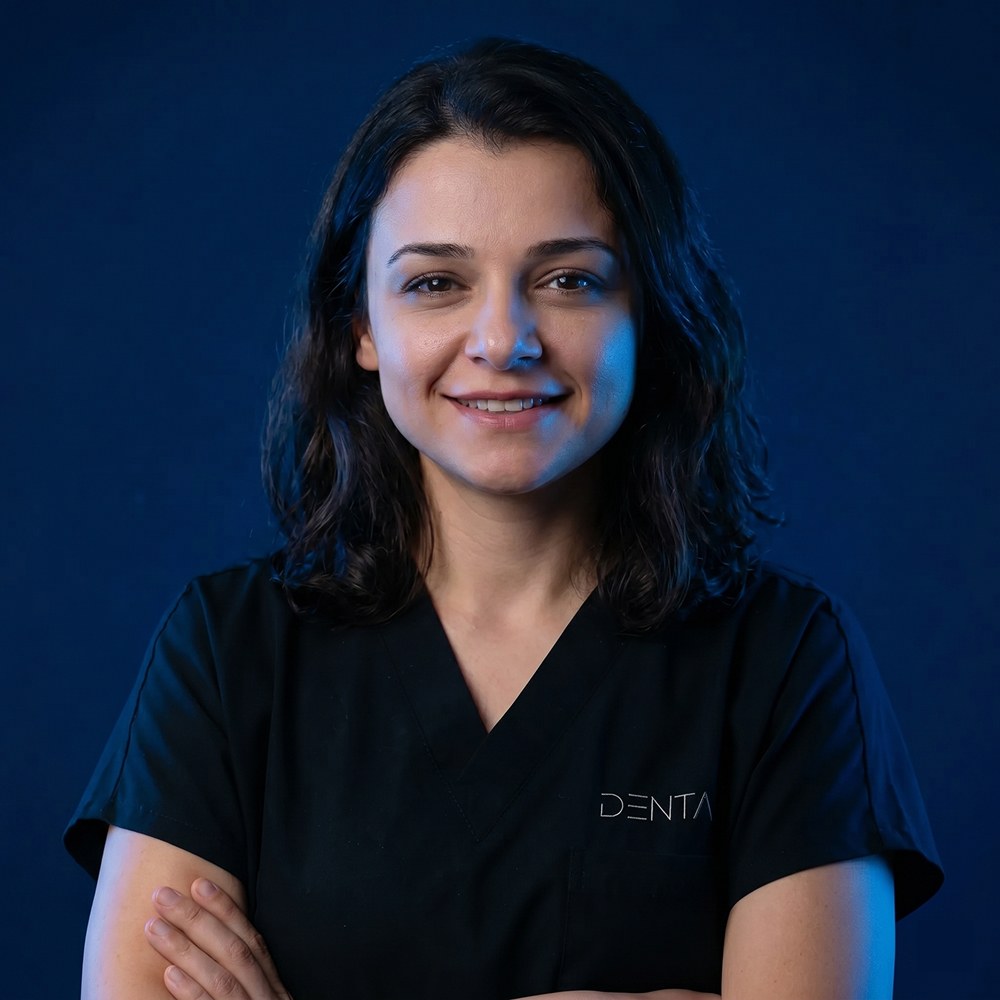
Written by Dr. Burak Gökdeniz (Head Dentist, Prosthodontics PhD) · Medically reviewed by Asst. Prof. Dr. Gülen Kamak (Periodontology Specialist) · Last reviewed: August 2026
What Are Turkey Teeth?
In practice, “turkey teeth” covers three different treatments: a full set of dental veneers or crowns on natural teeth, dental implants replacing missing teeth, and full-arch restorations such as All-on-4. Which one a patient actually needs depends on how many healthy teeth remain and the condition of the jaw, which is why any serious plan starts with an X-ray, not a price list. Done properly, the result is designed tooth by tooth in a smile makeover process and matched to a natural shade; the glowing white “piano key” look the press mocks is a style choice some clinics push, not a feature of Turkish dentistry.
Why Are They Called Turkey Teeth?
The phrase started in the British media as a sneer, the dental equivalent of calling Istanbul airport “Hairport”. It stuck because the numbers behind it are real. Every year, enormous numbers of UK patients travel to Turkey for treatment that costs a fraction of London private fees, with no waiting list. What the nickname skips over is why: clinic running costs, laboratory fees and salaries in Turkey are far below UK levels, and clinics like DentaFly manufacture crowns in their own on-site laboratory, removing third-party lab charges entirely. The saving is economic, not clinical. Over time the term has drifted from insult to shorthand, and many patients now search “turkey teeth” simply meaning a new smile done in Turkey. We break down how the phrase is used on both sides in Turkey teeth vs English teeth.
Jack Fincham: When the Story Runs the Other Way
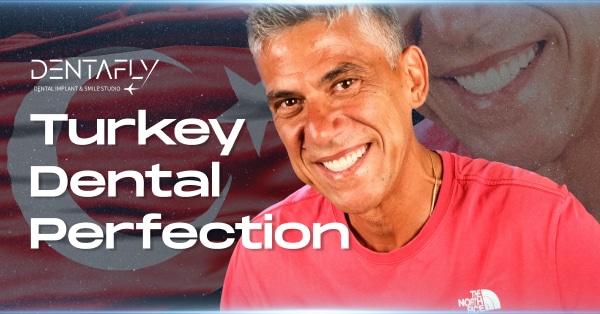
Few people are more closely tied to this debate than Love Island winner Jack Fincham. His dazzling 2018 smile helped start the trend. He has since spoken openly about wishing he had understood how invasive his first crowns were before having them done. Years on, unhappy with that original work, he did what he now urges everyone to do: he researched clinics properly. He chose DentaFly to redo his smile and documented the journey on camera, with the national press covering the process. His case followed the same protocol as every DentaFly patient: a diagnostic assessment first, a written plan naming every brand and material, treatment by named, registered dentists, and follow-up care afterwards at our London clinic.
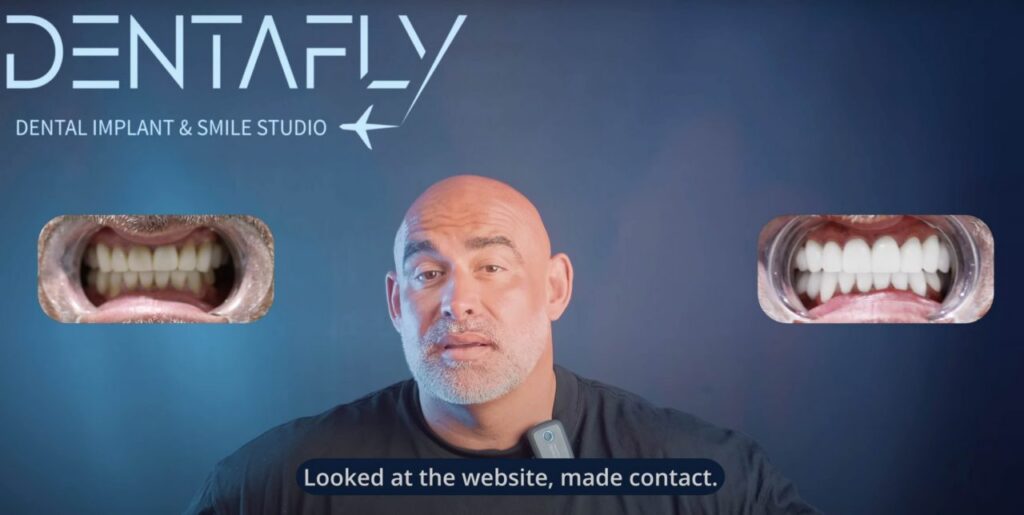
What convinced him was seeing the process up close. On his first visit, our clinicians walked Jack through how robotic implant placement works and took him inside our on-site laboratory, where dentists and technicians produce restorations on the same digital case files, a level of integration between clinician and lab that genuinely surprised him. He talks through what he saw in his own words here:
He is not alone: Katie Price and many other well-known faces chose Turkey after being dissatisfied with previous treatment, often quietly, because celebrity dental work in the UK or US routinely costs £25,000 to £30,000. The press rarely runs those follow-ups.
Already Have Turkey Teeth You Regret? We See Those Patients in London
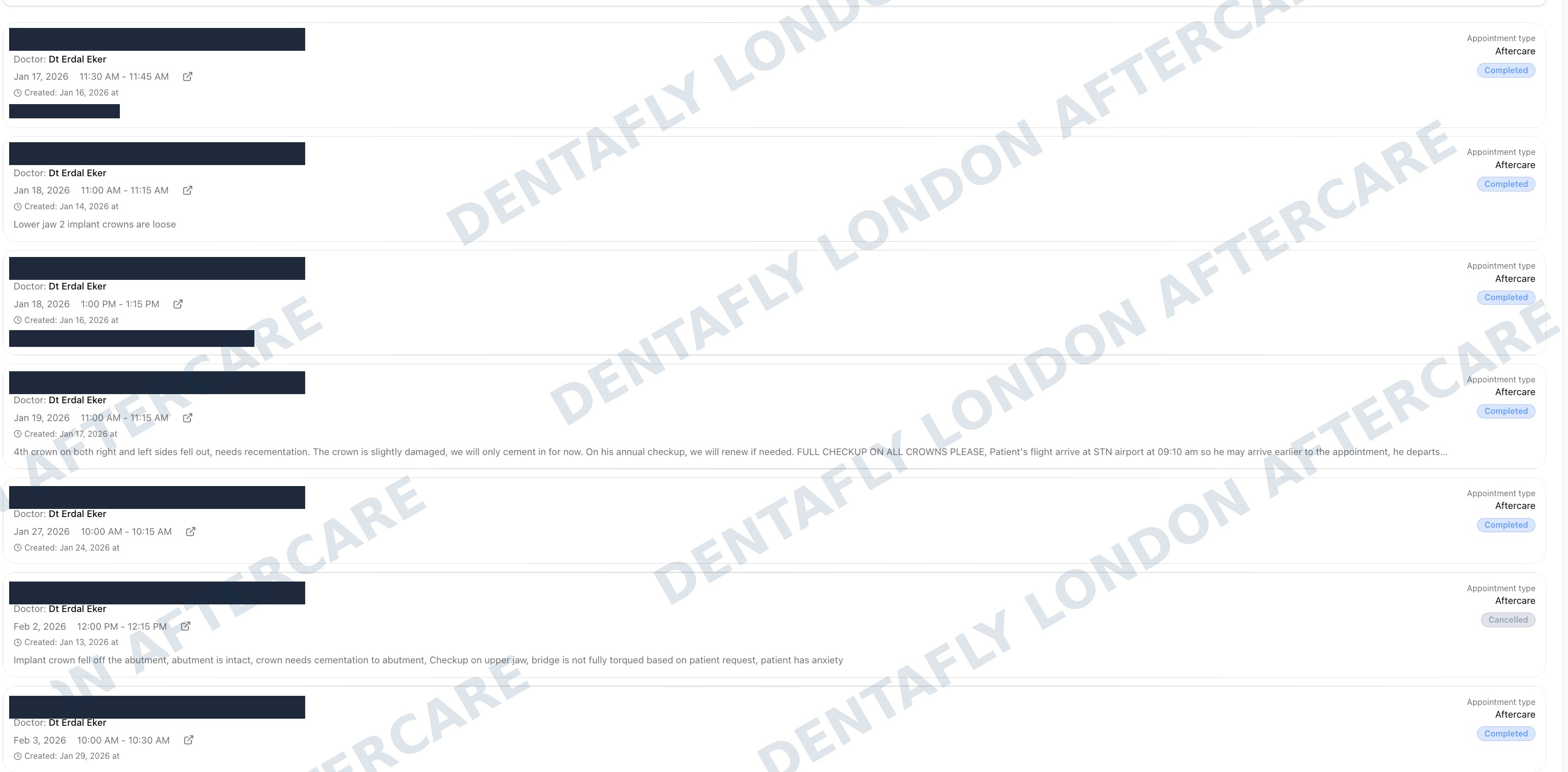
This is the part of the story the headlines never reach. A significant share of the people who walk into our London clinic at NW9 are not planning a trip to Antalya at all. They already had treatment somewhere else, in Turkey or in the UK, and something is wrong: a crown that never seated properly, a bridge that traps food, gums that bleed around the margins, an implant that was placed at the wrong angle, or a shade so bright they stopped smiling in photographs.
The first appointment costs nothing and does not commit you to anything. Our UK dentists examine what you have, take the imaging needed to see what is happening under the restorations, and tell you plainly what is salvageable and what is not. Sometimes the answer is reassuring: the work is sound and the problem is a bite adjustment or a hygiene issue. Sometimes it is not, and then the honest conversation is about what removing and replacing it actually involves.
What matters is that this conversation happens in London, face to face, before anyone books a flight. That is the practical answer to the “turkey teeth gone wrong” problem: not a promise that nothing ever goes wrong, but a UK address where a dentist can look in your mouth and take responsibility for what they find. Revision work that needs surgery is planned with our Antalya team and followed up back in London, so no part of it depends on you flying out again at your own risk. For the clinical detail on rescuing failed cases, see our guide to failed dental implants and revision treatment, and for how the UK side is staffed and structured, our London aftercare clinic page.
Assessments and follow-up appointments in London are carried out by Marius Ghita (GDC 251293) and Erdal Eker (GDC 263446), both registered with the UK General Dental Council and both permanent DentaFly staff rather than partner practitioners taking referrals. You can check either number yourself on the GDC’s public register before you book. The clinic itself is CQC registered under location 1-19677644389 and operated by Vestadent Limited, company number 12993512, at the same NW9 address. That is the difference between a UK presence you can verify and one you are asked to take on trust.
Why Do Turkey Teeth Go Wrong, and How to Avoid It
Bad outcomes are real, and they cluster around the same causes. Healthy teeth get shaved aggressively into pegs for crowns when veneers or bonding would have done the job. Treatment is sold on price alone, with no named dentist responsible and no written plan stating brands and counts. And there is no aftercare route once the patient lands back in the UK. Almost every “gone wrong” story in the news traces back to unregistered facilities, not to Turkish dentistry itself, which trains some of the most rigorously selected clinicians in Europe.
The Four-Point Verification Checklist
The protection is verification. Before paying any clinic a deposit, ask for four things in writing:
- Their health tourism licence.
- The name and Ministry of Health registration of the facility where you will actually be treated.
- The names and registrations of the dentists responsible for your treatment.
- A review base large enough to be meaningful, on platforms the clinic cannot edit.
A legitimate clinic answers all four without hesitation. DentaFly’s answers are public: AACI international accreditation, CQC registration in the UK, named dentists with published credentials, and 1,800+ Trustpilot reviews rated 4.8/5. And there is one safeguard no price list can offer: you can book a free in-person assessment at our London clinic (NW9) and have a dentist examine you before you decide anything, then travel only with a confirmed written plan in hand. Every routine follow-up after treatment happens in London too, so aftercare never depends on another flight. More on the safety question: is it safe to have dental treatment in Turkey?
How Long Do Turkey Teeth Last?
Longevity depends on the material and on how conservatively the natural teeth were prepared; research links aggressive cutting directly to higher failure rates, which is another reason the “shaved to pegs” approach is the wrong one. DentaFly’s warranty periods follow the materials’ real-world durability:
| Dental treatment in Turkey | Average warranty period |
|---|---|
| Composite bonding | No warranty |
| Porcelain crown | 3 years |
| Zirconium crown | 5-8 years |
| e.max / veneer crowns | 2-3 years |
| Dental implants | Lifetime warranty |
Two things are worth saying plainly about these figures. The implant itself is the part that carries a lifetime guarantee against material failure; the crown or veneer sitting on top of it is a wearing component with a shorter life, which is why the periods differ by material rather than sitting under one headline number. And the warranty covers material defects, not damage from trauma, hygiene neglect, smoking-related bone loss or alteration by an outside dentist. Full terms are issued in writing at treatment, and you can ask for a copy before you pay a deposit. Routine reviews and warranty assessments happen at our London clinic rather than by post or email.
What Do Turkey Teeth Cost?
A full set of 20 zirconium crowns is £2,800 at DentaFly, working out at £140 per tooth, with All-on-4 fixed implants from £6,604 for both jaws and single Ivoclar e.max veneers at £220. The honest answer beyond that is: it depends on the route, the material and the number of teeth, which is exactly what a written, itemised quote establishes. For the complete picture, see the full 2026 price list and the full set of teeth cost guide, or build your own estimate with the implant price calculator.
What Turkey Teeth Really Look Like
Natural shade, proportions matched to the face, and conservative preparation underneath: that is what the treatment looks like when it is planned properly. Browse dozens of documented UK patient cases in the turkey teeth before and after gallery.
What Our Patients Say
Google Reviews: London Clinic
Google Reviews: Antalya Clinic
Frequently Asked Questions
What are turkey teeth?
“Turkey teeth” is the UK nickname for cosmetic dental treatment done in Turkey, most commonly a full set of crowns or veneers, and increasingly dental implants and All-on-4 restorations. The phrase covers several clinically distinct treatments; which one a patient needs is determined by an X-ray assessment, not by the name.
Are turkey teeth bad?
The treatments themselves are standard modern dentistry using the same brands found in UK practices. Bad outcomes cluster around unverifiable providers: aggressive cutting of healthy teeth, no named dentist, no written plan and no aftercare. Verify the clinic’s health tourism licence, Ministry registration, named dentists and independent reviews before booking, and the risk profile matches having treatment at home.
How much do turkey teeth cost?
At DentaFly, a full set of 20 zirconium crowns is £2,800, All-on-4 fixed implants start at £6,604 for both jaws, and single Ivoclar e.max veneers are £220 per tooth. The final figure depends on the route, material and number of teeth, and is confirmed in a fixed written quote after a free assessment. See the full price list for every treatment.
How long do turkey teeth last?
It depends on the material: dental implants placed at DentaFly carry a lifetime warranty, zirconium crowns 5-8 years, porcelain crowns 3 years and e.max veneers 2-3 years, while composite bonding carries no warranty. Conservative tooth preparation also matters, as research links aggressive cutting to higher failure rates.
Do turkey teeth look fake and too white?
Only if they are designed that way. The extreme white “piano key” look is a style choice pushed by some providers, not a feature of Turkish dentistry. A properly planned smile is designed digitally tooth by tooth, matched to a natural shade and to the proportions of your face, as the results in our before and after gallery show.
Can turkey teeth be fixed if they went wrong?
In most cases yes, and the assessment happens in the UK. Our London clinic in NW9 sees patients every week who had work done elsewhere and are unhappy with it. The first appointment is free: our UK dentists examine the existing restorations, take the imaging needed to see what is under them, and tell you what can be saved and what cannot. Revision work requiring surgery is planned with the Antalya team and followed up in London.
What happened with Jack Fincham’s teeth?
Love Island winner Jack Fincham came to DentaFly in Antalya to put right dental work he was unhappy with, and documented the treatment on video. His case followed the standard DentaFly protocol: diagnostic assessment, a written itemised plan, treatment by named registered dentists, and follow-up care at our London clinic.
How do I avoid turkey teeth gone wrong?
Ask every clinic for four things in writing before paying: their health tourism licence, the Ministry of Health registration of the treating facility, the names and registrations of the responsible dentists, and independent reviews they cannot edit. Better still, have a free in-person assessment at DentaFly’s London clinic first and travel only with a confirmed written plan.