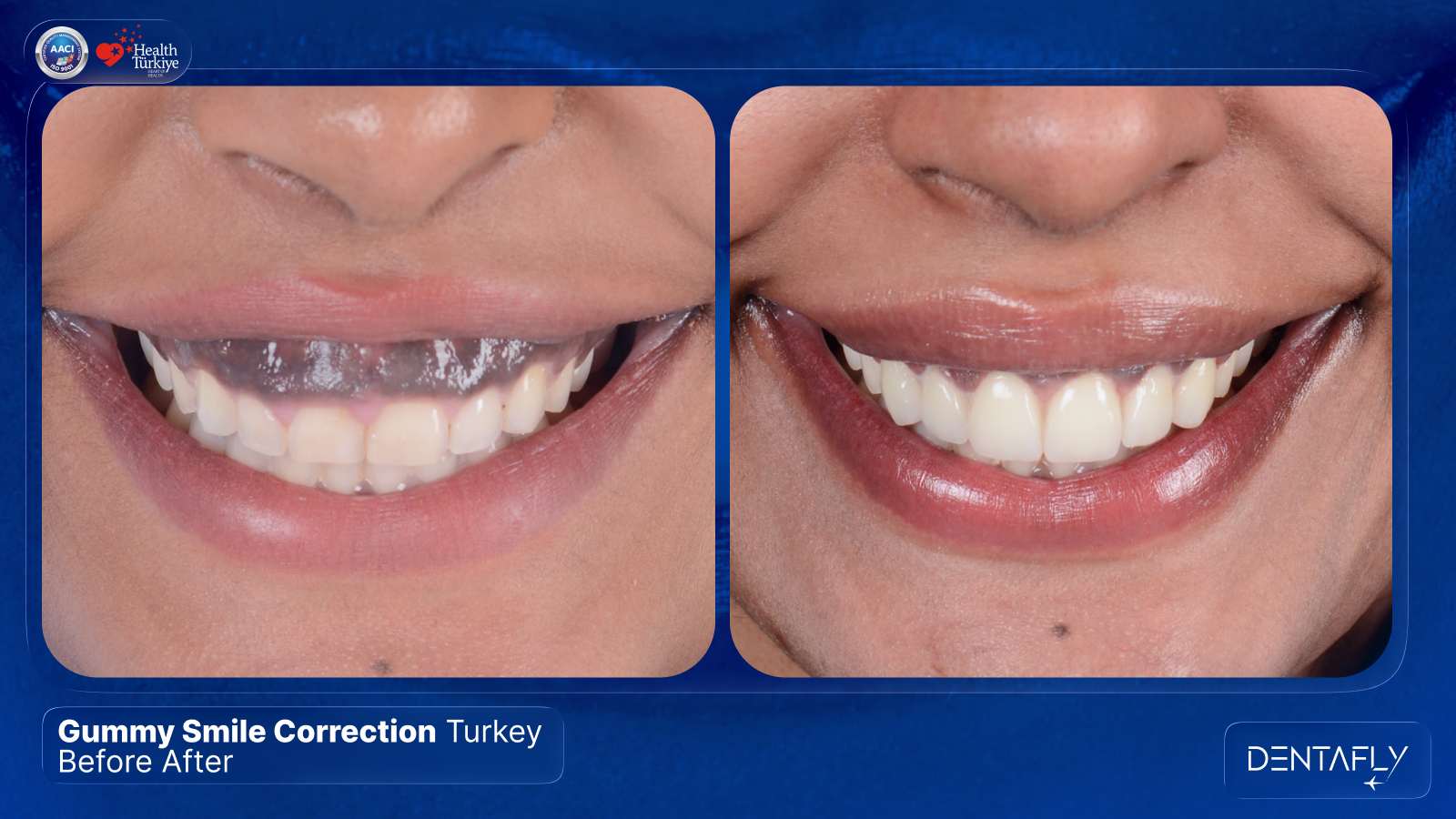
A gummy smile correction Turkey trip is shorter, less invasive, and more affordable than most UK patients expect. Specifically, the correction procedure for the most common cause takes 30 minutes, costs £450 at Dentafly Antalya, and produces a result you see in the chair before you leave. The longer conversation, the one that decides which procedure you actually need, happens before the treatment chair is ever switched on.
This guide covers the four clinical causes of a gummy smile, the two Dentafly treatment options matched to those causes, transparent pricing in pounds sterling, and the structured London NW9 aftercare that follows your trip home. The medical content is written by our periodontology lead Asst. Prof. Dt. Gülen Kamak and clinically reviewed by senior dental surgeon Dr. Burak Gökdeniz, with references drawn from current StatPearls and peer-reviewed literature on excessive gingival display. For the broader cosmetic context, see our complete smile makeover Turkey pillar guide.
What Is a Gummy Smile? Clinical Definition
The clinical term for a gummy smile is excessive gingival display. It describes a smile in which more upper gum is revealed than the proportion considered aesthetic. As a result, the smile draws the eye to the gum line rather than to the teeth themselves, even when the teeth are well-shaped and white.
How much gum is too much? The 3mm rule
Current periodontology literature, including the StatPearls reference text on Excessive Gingival Display, defines the boundaries clearly. Specifically:
- 0-2mm of visible gum at full smile: normal, youthful, aesthetically positive
- 2-3mm: mild gingival display, usually not treated unless the patient requests it
- 3-4mm: moderate gummy smile, the most common range presenting at consultation
- 4mm+: severe gummy smile, often visible even at rest with the lips parted
The 3mm threshold matters because it is the line where the visual attention shifts. Below 3mm, viewers typically register a “lively, expressive smile”; above 3mm, the gums become the dominant visual element of the smile. The correction goal is rarely zero millimetres; it is to return the display to the 1-2mm range that reads as natural and youthful.
How common is gummy smile in adults?
Population-prevalence studies place excessive gingival display at approximately 10-29% of younger adults, with women presenting more commonly than men. Across clinical and population studies, women are roughly two to three times more likely to present with the condition, partly reflecting greater willingness to seek cosmetic treatment rather than a true biological difference in prevalence.
Why bother treating it?
Treatment is not medically required. A gummy smile causes no functional dental problem, and the underlying teeth and gums can be in excellent health. The reason patients seek correction is aesthetic: many people who have grown up with a gummy smile describe holding back full smiles in photographs, social settings, and professional contexts. For most patients, the correction is a quality-of-life intervention rather than a medical necessity.
The 4 Clinical Causes of Gummy Smile
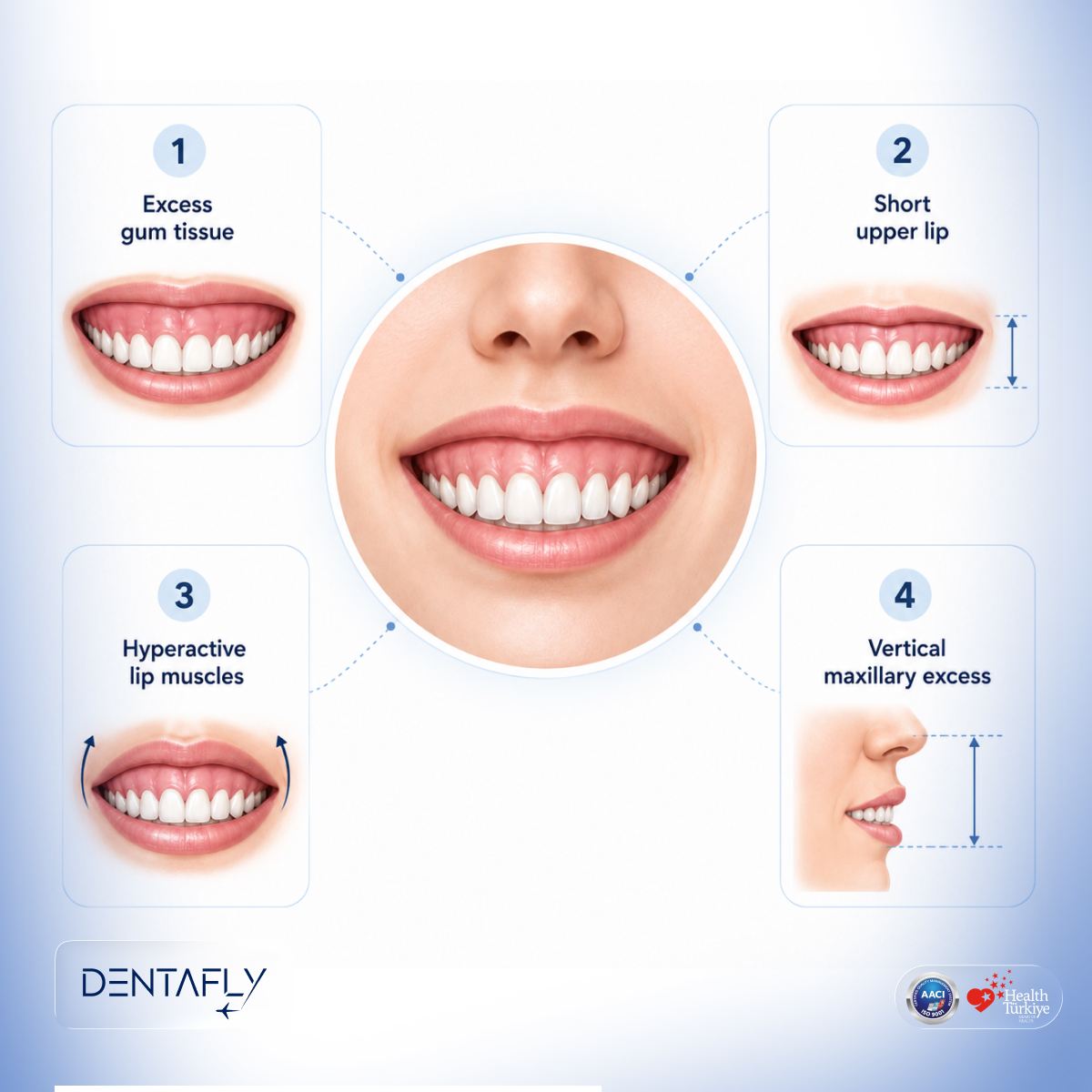
The four clinical causes below cover the majority of presenting cases. A gummy smile is multifactorial in many patients, meaning two or more causes can present simultaneously. Specifically, the StatPearls reference identifies vertical maxillary excess as one of the most common single causes, but combined etiology (for instance, mild VME paired with hyperactive lip muscles) accounts for a significant share of cases that resist simple single-treatment correction.
Cause 1: Excess gum tissue
The most common cause in the under-35 age group is excess gum tissue, which itself has two sub-mechanisms:
- Delayed (altered) passive eruption: a developmental pattern where the gum failed to recede to the cementoenamel junction during normal tooth eruption. The teeth appear short because part of the crown is still covered by gum, not because the teeth are genuinely short.
- Gingival hyperplasia: overgrowth of gum tissue caused by genetic predisposition, certain medications (some anti-epileptics, calcium channel blockers, immunosuppressants), or hormonal influences.
Both sub-types respond well to laser gum contouring or surgical gingivectomy. The result is visible immediately and is permanent for the altered passive eruption type; medication-induced hyperplasia may recur if the causative medication continues.
Cause 2: Short upper lip
Average upper lip length (measured from subnasale to the lower lip border) sits at approximately 20mm in adult women and 21mm in adult men, with a standard deviation of around 2-3mm. Patients with notably shorter upper lips reveal more gum at full smile because the lip simply does not have the vertical dimension to cover the upper teeth and gum margin during the smile dynamic.
A short upper lip does not respond to gum reduction (the lip would still ride high above any corrected gum line). Correction of this cause is outside the scope of Dentafly’s gummy smile service; patients in whom short upper lip is the primary cause are counselled honestly and referred to a maxillofacial or aesthetic specialist for procedures such as lip repositioning surgery.
Cause 3: Hyperactive lip muscles
The upper lip is elevated by three paired muscles: the levator labii superioris (LLS), the levator labii superioris alaeque nasi (LLSAN), and the zygomaticus minor (ZMi). When these muscles contract more forcefully than average during the smile dynamic, the upper lip lifts higher than expected, exposing more gum than the underlying anatomy would otherwise reveal.
Hyperactive lip muscle correction is not a core Dentafly service. Where this is the sole primary cause, we provide an honest assessment and recommend referral to a maxillofacial or aesthetic medicine specialist. Where it is a secondary contributing factor combined with excess gum tissue, laser gum contouring or surgical crown lengthening can still produce a meaningful improvement to the visible gum display.
Cause 4: Vertical maxillary excess (VME)
Vertical maxillary excess is the structural cause: the upper jaw bone (maxilla) sits lower in the face than typical anatomy, exposing more gum even when the lip and gum tissue are themselves normal. Specifically, this is the most challenging cause to address because the underlying skeletal architecture is fixed.
Mild VME (1-3mm beyond normal) can sometimes be camouflaged with gum contouring. Moderate VME may benefit from orthodontic intrusion of the anterior teeth. Severe VME, however, may require orthognathic surgery (Le Fort I osteotomy) to physically reposition the maxilla. As a general rule, at Dentafly we focus on the laser and crown lengthening pathway; severe orthognathic cases are referred or counselled honestly about the alternatives.
How We Diagnose Your Specific Cause
At Dentafly Antalya, the Day 1 consultation goes through a structured four-part diagnostic protocol before any treatment is recommended. Specifically, this sequence comes directly from the periodontology consensus literature regarding the assessment of the gummy smile and forms the basis for the correct treatment match. The initial examination is usually performed by dentist Dr. Gökdeniz.
Step 1: Static and dynamic lip analysis
Views are taken at the smile line and with the jaws closed. The possible incisions in this visual situation are explained with sample results provided to the patient. Over 740 patient evaluation videos on Dentafly’s YouTube account are also shown as examples to illustrate the case during consultations.
Step 2: Periodontal examination
The gingival margin is probed on each front tooth to determine where the enamel-cementum junction sits relative to the visible gingival line. The size of teeth experiencing a gummy smile or any potential gum problems are specifically explained.
Step 3: Tooth proportion assessment
The width-to-length ratio of the front teeth is measured. As a general rule, healthy upper central incisors have a width-to-length ratio of 75-80%. Specifically, a ratio above 85% indicates that the teeth appear too short and often points to changes in passive eruption or wear of the tooth structure. As also applied in Snow SR, the preferred width-to-length ratio of the incisor center tooth is 78%, and this is generally preferred in cases where the desired tooth duration is not considered, and aesthetic dental treatments are not taken into account. https://pubmed.ncbi.nlm.nih.gov/26140969/
Step 4: Cephalometric analysis (when indicated)
A lateral cephalometric radiograph is taken for suspected vertical maxillary excess. The image reveals whether the underlying maxillary bone is in a normal position or shows vertical excess according to standard craniofacial measurements. Although X-rays and 3D X-ray images of patients referred to our London clinic for consultation are reviewed, our chief physician, Dr. Burak Gökdeniz, may request additional images if deemed necessary.
By the end of Day 1, your written treatment plan identifies the primary cause, secondary contributing factors if any, and the recommended treatment pathway. The conversation about which procedure to choose happens with the diagnostic evidence already in hand.
Gummy Smile Correction Treatment Options
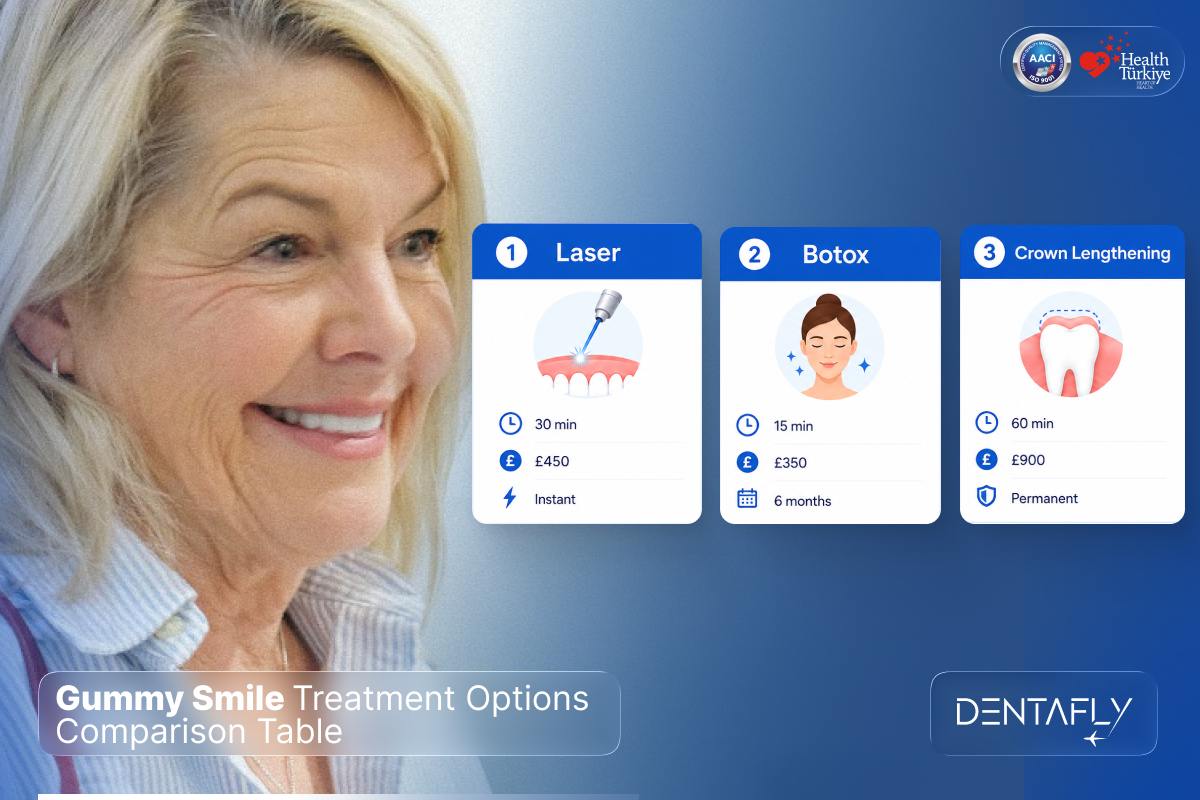
Dentafly offers two primary gummy smile correction treatments at the Antalya facility, both producing permanent results. As a result, the treatment match depends entirely on which of the four causes is identified during diagnosis. Below are the two options, each followed by detailed sections later in the guide.
1. Laser Gum Contouring
Diode laser ablation of excess gum tissue. Minimally invasive, no sutures, immediate result. Best for excess gum tissue cause (delayed passive eruption or gingival hyperplasia) and mild vertical maxillary excess camouflage. Patients eat normally the same evening; full healing in 7-10 days.
2. Crown Lengthening (Surgical)
Surgical reshaping of both the gum tissue and the underlying bone to expose more tooth and create proportionate aesthetics. Best for moderate-to-severe excess gum tissue, particularly with combined biologic width considerations or when veneer or crown work is planned alongside. Healing takes 7-14 days; full tissue maturation continues for 8-12 weeks.
Get Your Personalised Treatment Plan
Send your smile photographs and we’ll return a written treatment plan with diagnosed cause, recommended procedure, and total cost in pounds sterling within 24 hours.
Get Your Free Quote

Zirconium Crowns 10 Upper 10 Bottom
Zirconium Crowns 10+10
Apply for Dental Finance
e-max Veneers 8+8
e-max Veneers 8+8
Apply for Dental Finance
All-on-4 Cad/Cam
Apply for Dental Finance
All-on-6 Cad/Cam
Apply for Dental Finance
Composite Bonding 10+10
Apply for Dental Finance
Laser Gum Contouring Step by Step
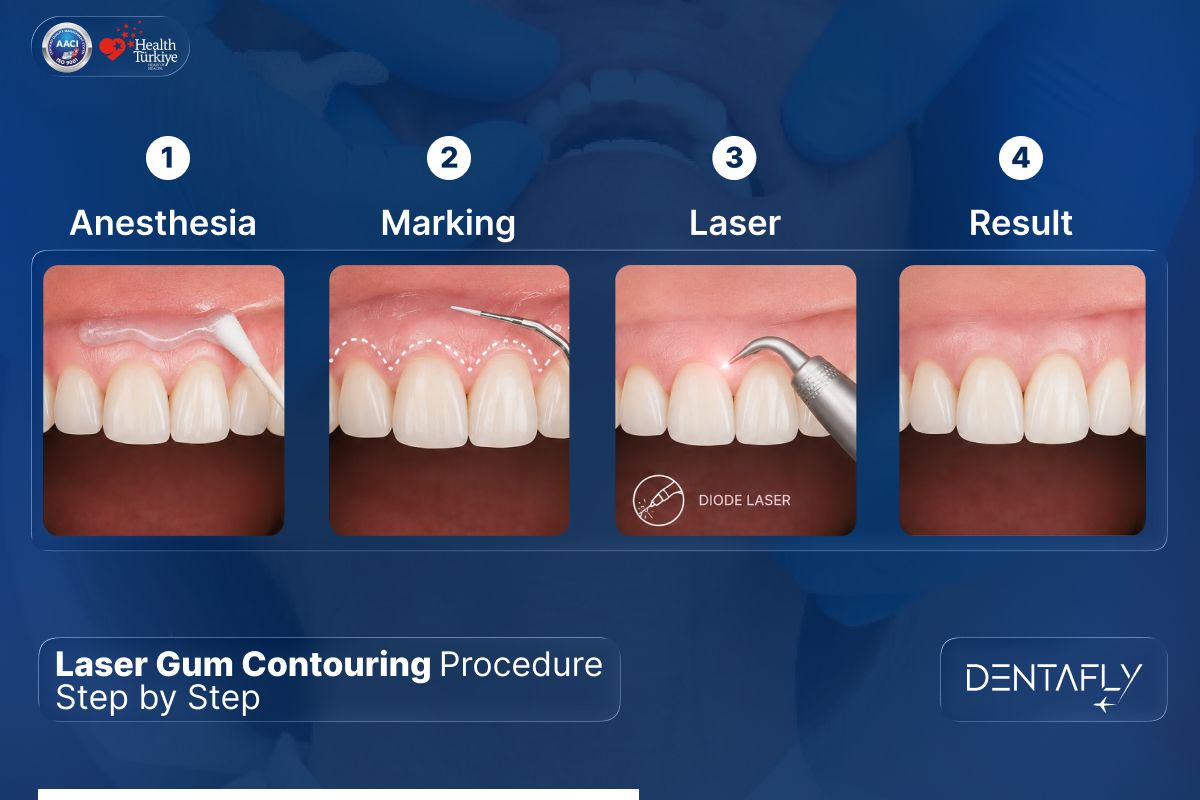
The laser gum contouring procedure is the most-performed gummy smile correction at our Antalya facility because it produces immediate, permanent results with minimal recovery. As a result, the entire procedure takes 30 minutes from chair entry to mirror review.
Step 1: Topical and local anaesthesia
A topical anaesthetic gel is applied along the gum margin for approximately 3 minutes. Subsequently, minimal local anaesthetic infiltration is administered along the planned correction zone. The total injection volume is small because the diode laser causes minimal nerve stimulation compared to scalpel techniques.
Step 2: Marking the new gum line
Using a fine periodontal probe, the clinician marks the corrected gum line precisely. Specifically, the marking respects three key constraints: biologic width (the protective tissue zone between gum and bone), planned tooth proportions (typically a 75-80% width-to-length ratio for the maxillary central incisors), and natural scalloping (the gentle peaks and valleys that distinguish a natural gum line from a flat, surgical-looking line).
Step 3: Diode laser ablation
The diode laser (810nm or 940nm wavelength) precisely removes the excess gum tissue along the marked line. The laser energy simultaneously cuts and cauterises, which produces minimal bleeding and eliminates the need for sutures compared to conventional scalpel surgery. Notably, this is the procedural advantage over traditional scalpel gingivectomy: the patient leaves with a clean, healed-edge gum line rather than sutured tissue.
Step 4: Immediate result verification
The corrected gum architecture is verified against the planned proportions. Photographic documentation captures the result, and the patient sees the corrected smile in the mirror within 30 minutes of arrival at the clinic. A brief aftercare briefing follows: cool soft diet for 24 hours, antiseptic mouthwash for 5 days, and a follow-up photograph at the 7-day mark.
Crown Lengthening: The Surgical Option
Crown lengthening is the appropriate choice when the gum tissue needs reshaping beyond what laser contouring can achieve, particularly where the underlying bone position also requires adjustment to expose a sufficient amount of natural tooth structure.
When crown lengthening is indicated
The procedure is recommended specifically when:
- The excess gum is paired with insufficient tooth crown height for veneer or crown placement
- Bone recontouring is needed alongside gum reshaping (biologic width considerations)
- The case involves more than 3-4mm of correction at the gum-bone level
- The patient is planning veneer or crown work and requires longer clinical crowns for restoration
The surgical procedure
Crown lengthening is performed under local anaesthesia and takes approximately 60 minutes for the anterior region. The clinician carefully reflects the gum tissue, recontours the underlying bone to the new planned level using fine surgical burs, repositions the gum at the corrected height, and places fine sutures. Healing takes 7-14 days for soft tissue and continues at the bone level for 8-12 weeks before final restorative work can begin.
Combined with veneer or crown work
Crown lengthening is frequently combined with a full smile makeover. Specifically, the sequence is: crown lengthening at month 0, healing through month 3, then veneer or crown placement at month 3. This pathway is covered in the full smile makeover Turkey pillar and is the most common combined-treatment scenario for UK patients with both excessive gingival display and concerns about tooth shape or shade.
Which Treatment for Which Cause? Decision Matrix
The matrix below summarises the cause-to-treatment match. Notably, real cases often involve combined etiology and benefit from combined treatment; the table represents the primary recommendation for single-cause cases.
| Primary cause | Severity | Recommended Dentafly pathway |
|---|---|---|
| Excess gum tissue (altered passive eruption) | Mild to moderate | Laser gum contouring (£450) |
| Excess gum tissue with biologic width or restoration needs | Moderate to severe | Surgical crown lengthening (£900) |
| Excess gum + planned veneers | Combined cosmetic case | Crown lengthening + veneer smile makeover |
| Vertical maxillary excess | Mild (1-3mm) | Laser camouflage may be adequate |
| Vertical maxillary excess | Moderate to severe | Honest assessment; orthognathic referral |
| Short upper lip | Any severity | Referral to maxillofacial / aesthetic specialist |
| Hyperactive lip muscles (primary cause) | Any severity | Honest assessment; specialist referral |
| Hyperactive lip muscles (secondary, with excess gum) | Combined | Laser or crown lengthening for the gum component |
Get Your Cause-Specific Treatment Plan
Tell us about your situation and we’ll return a personalised diagnosis and treatment recommendation within 24 hours.
Get Your Free Quote
Zirconium Crowns 10 Upper 10 Bottom
Zirconium Crowns 10+10
Apply for Dental Finance
e-max Veneers 8+8
e-max Veneers 8+8
Apply for Dental Finance
All-on-4 Cad/Cam
Apply for Dental Finance
All-on-6 Cad/Cam
Apply for Dental Finance
Composite Bonding 10+10
Apply for Dental Finance
Gummy Smile Correction Turkey Cost
UK patients save 60-75% on gummy smile correction compared with UK private rates, while using the same equipment standards and clinical protocols. Specifically, the figures below assume the same single-procedure scope at both ends.
Treatment-by-treatment cost comparison
| Treatment | UK private average | Dentafly Antalya | Saving |
|---|---|---|---|
| Laser gum contouring | £1,200-£1,800 | £450 | ~63-75% |
| Surgical crown lengthening | £2,400-£3,500 | £900 | ~63-74% |
| Crown lengthening + veneer smile makeover (8 units) | £10,000+ | £2,540 (£900 + 8 × £230) | ~75% |
What is included in the Dentafly price
Each treatment price covers the Day 1 consultation and diagnostic assessment, the procedure itself, post-procedure photographic documentation, the take-home aftercare kit (antiseptic mouthwash, soft-bristle brush, written aftercare protocol), and the 6-month London NW9 8SN aftercare review. As a result, the headline figure is the total cost; no hidden fees are added during treatment.
Flexible Dental Finance from £52.04/mo
UK patients can spread larger gummy smile correction packages across 6-60 months using our partner dental finance providers. For instance, a combined crown lengthening plus 8-unit veneer smile makeover at £2,540 sits comfortably inside our Composite Bonding 10+10 finance equivalent at £52.04 per month. Standalone laser procedures under £1,500 are typically paid as one-time treatments because the savings outweigh finance interest costs.
Zirconium Crowns 10 Upper 10 Bottom
Zirconium Crowns 10+10
Apply for Dental Finance
e-max Veneers 8+8
e-max Veneers 8+8
Apply for Dental Finance
All-on-4 Cad/Cam
Apply for Dental Finance
All-on-6 Cad/Cam
Apply for Dental Finance
Composite Bonding 10+10
Apply for Dental Finance
Get Your Itemised Quote
Send us your smile photographs and we’ll return a written quote in pounds sterling within 24 hours, with no obligation to book.
Get Your Free QuoteA Periodontist’s Perspective
The technical specifications cover what is possible; the clinical wisdom covers what is right for each patient. Specifically, we asked Asst. Prof. Dt. Gülen Kamak, our periodontology lead, to describe the heart of the diagnostic process.
In our periodontology practice, the most important hour of a gummy smile correction is the initial assessment, not the procedure itself. Three patients can present with identical 4mm gingival display and need three entirely different treatments. A patient with hyperactive lip muscles, a patient with altered passive eruption, and a patient with vertical maxillary excess all reveal the same clinical sign but require different clinical answers. The discipline is to resist treating the symptom and instead treat the cause.
UK Patient Trip Timeline in Antalya
Gummy smile correction trips are significantly shorter than typical smile makeover trips because the procedures themselves are short and recovery is rapid. As a result, most UK patients complete the entire pathway in 1-5 days depending on which procedure applies.
For laser gum contouring (1-2 days)
- Day 0: arrival at Antalya International (AYT), VIP transfer to hotel, light dinner, rest
- Day 1: consultation, diagnostic assessment, laser procedure (30 minutes), 1-hour post-procedure review, return to hotel
- Day 2 (optional): follow-up photographs, sightseeing or rest, evening return flight
For surgical crown lengthening (3-5 days)
- Day 0: arrival, hotel check-in, rest
- Day 1: consultation, diagnostic assessment, cephalometric imaging if indicated, written treatment plan
- Day 2: surgical crown lengthening procedure (60 minutes), 90-minute observation, anti-inflammatory and antibiotic regimen begins
- Day 3-4: rest, soft diet, follow-up wound check at 24 hours, sightseeing as tolerated
- Day 5: final review, suture removal if non-resorbable used, return flight cleared
Real UK Patient Experience
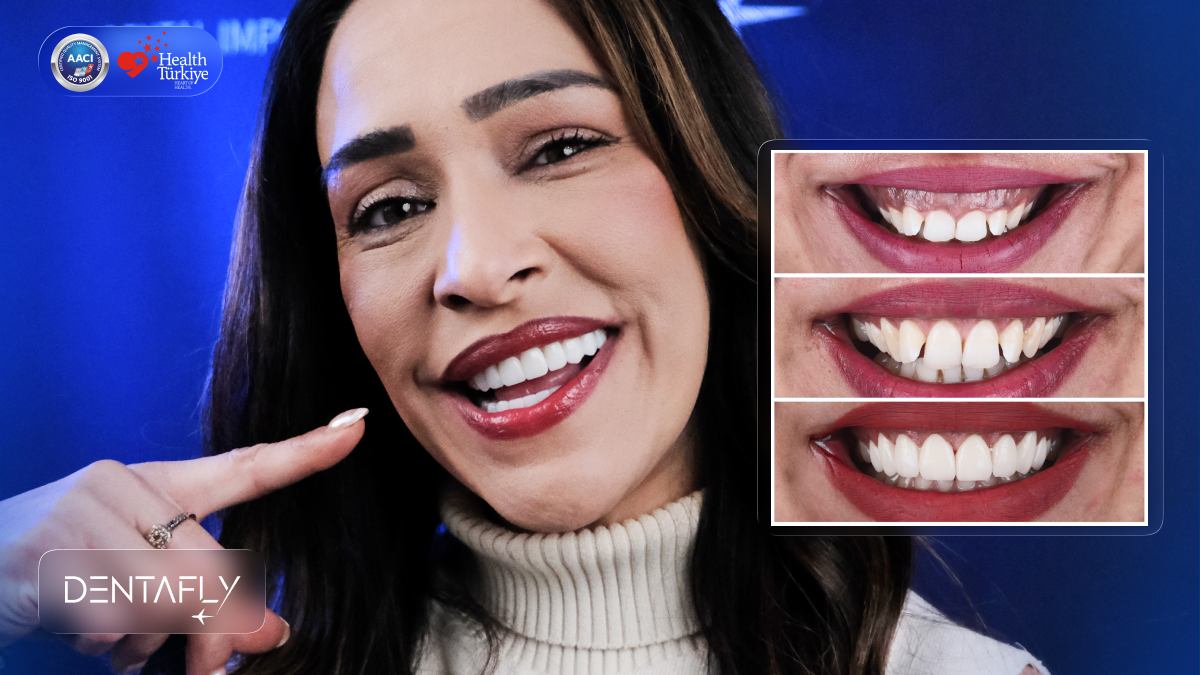
UK patients with gummy smile correction needs typically arrive having tried whitening, considered veneers alone, or sought consultation with a UK private cosmetic dentist. Specifically, the most common conversation starts with “I want to fix my smile but I don’t know what’s actually wrong with it.” The diagnostic Day 1 frequently resolves that uncertainty within the first hour.
Our YouTube archive of 700+ UK patient stories includes several gummy smile correction cases, alongside smile makeover combinations where the gummy smile correction formed part of a wider aesthetic plan. The Trustpilot review base reflects the same pattern: most positive feedback emphasises the relief of finally understanding the underlying cause, rather than the procedure itself.
Watch: 5 Common Reasons Your Gums Bleed
Bleeding gums are one of the most frequent presenting signs in periodontology practice and often appear alongside the same gum-tissue patterns that drive gummy smile cases. In the video below, our clinical team walks through the five most common causes of gum bleeding and how to stop it quickly.
What Our Gum Treatment Patients Say
UK Aftercare at London NW9 8SN
Every gummy smile correction patient receives a structured 6-month aftercare review at our London clinic. Specifically, the review covers:
- Gum line stability check against the post-procedure baseline photograph
- Periodontal pocket measurement at the corrected zone
- Bone-level review for surgical crown lengthening cases (radiograph if indicated)
- Soft-tissue maturation assessment at the 6-month mark, when laser and crown lengthening results have fully stabilised
- Hygiene maintenance with restoration-safe instruments and technique reinforcement
The NW9 8SN clinic is led by Dt. Merve Sezer Topcu, our UK Aftercare coordinator, with periodontal escalation available from Asst. Prof. Dt. Gülen Kamak. For the broader UK aftercare programme structure see our UK aftercare guide.
The concern for every dentist, especially periodontists, is infections during the healing process after implant placement. Since this affects the success of the implants, it is very upsetting for patients to have to return to Türkiye for infection treatment and then wait for the final treatment. However, thanks to our clinic in London, these patients can now receive treatment much more easily. We are able to provide early diagnosis and preventative care for peri-implant infections, which prolong the treatment process, especially when they occur with titanium implant bar systems, at our London clinic.
Frequently Asked Questions
Causes and Diagnosis Questions
How much gum showing is too much?
Can a gummy smile fix itself or get worse with age?
How do I know which cause applies to me before consultation?
Treatment and Procedure Questions
Is laser gum contouring painful?
What happens if I have multiple causes simultaneously?
Can gummy smile correction be combined with veneers in one trip?
What does Dentafly recommend if my cause is short upper lip or hyperactive lip muscles?
Cost and Recovery Questions
How much does gummy smile correction cost in Turkey?
How long is the recovery and when can I return to work?
How long does the gummy smile correction result last?
UK Aftercare for Gummy Smile Correction Patients
Every Dentafly gummy smile correction patient receives a structured aftercare review at our London clinic six months after treatment. The visit covers gum-line stability assessment against the post-procedure baseline, periodontal probing at the corrected zone, bone-level review for surgical cases, soft-tissue maturation assessment, and professional hygiene maintenance.
The NW9 8SN clinic is led by Dt. Merve Sezer Topcu, our UK Aftercare coordinator, with periodontal escalation available from Asst. Prof. Dt. Gülen Kamak when complex follow-up is required. All UK-based clinical work is performed by GDC-registered clinicians.
- 📍 230 Church Lane, London NW9 8SN
- 📞 +44 20 3302 9290
- ✉️ [email protected]
- 🕐 Mon-Fri 9:00-18:00, Sat 10:00-17:00
- 🚇 12 min from Colindale (Northern Line)
- 🚗 8 min from M1 Junction 2, free parking on-site
Zirconium Crowns 10 Upper 10 Bottom
Zirconium Crowns 10+10
Apply for Dental Finance
e-max Veneers 8+8
e-max Veneers 8+8
Apply for Dental Finance
All-on-4 Cad/Cam
Apply for Dental Finance
All-on-6 Cad/Cam
Apply for Dental Finance
Composite Bonding 10+10
Apply for Dental Finance
Related Guides
- Smile Makeover Turkey
- Hollywood Smile vs Natural Smile Makeover
- Hollywood Smile in Turkey
- E.max Laminate Veneers Turkey
- Zirconium Crowns Turkey
- Gum Treatment in Turkey (Periodontal Therapy)
- Digital Smile Design Turkey
- Complete Dental Treatment Price List
- Dental Treatment Abroad UK
- UK Aftercare at London NW9 8SN
- Meet the Dentafly Specialist Team