The maxillary sinuses are air-filled cavities located just above the upper back teeth (molars and premolars). When these teeth are lost, two biological processes occur: the jawbone begins to resorb (shrink), and the sinus floor naturally drops down due to gravity and air pressure. This reduces the bone height available for dental implants.
For a standard dental implant, we generally require a bone height of 7-8 mm. When the available bone drops below 8 mm, a Sinus Lifting (Sinus Augmentation) procedure is mandatory to create a safe foundation.
At Dentafly Dental Hospital, we determine the correct technique based on precise 3D X-ray measurements.
1. The Closed Sinus Lifting Technique (Internal Approach)
This technique is preferred when the patient has a moderate amount of bone remaining.
- The Criteria: Used when the existing bone height is between 3.5 mm and 7 mm.
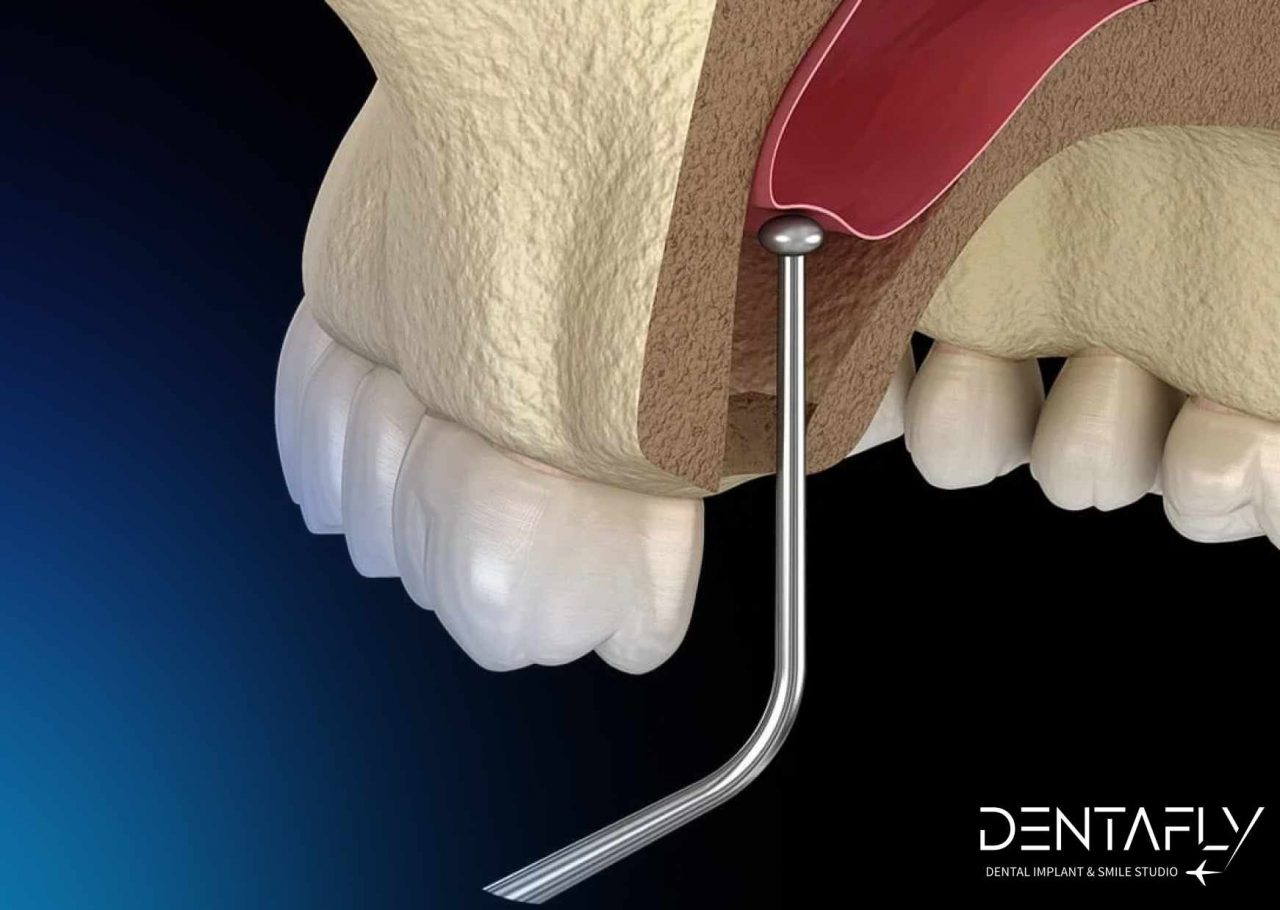
- The Procedure: The sinus floor is lifted through the same socket prepared for the dental implant. No extra surgical incision is needed on the gum wall.
- The Outcome: We can lift the sinus floor by about 4-5 mm. In many cases, the natural tenting of the sinus membrane is enough to stimulate the body’s own bone formation, often without the need for excessive bone grafts or membranes.
- Benefits: It is safer, more economical, and allows for faster healing with fewer complications.
2. The Open Sinus Lifting Technique (Lateral Window)
This technique is necessary for patients with severe bone loss.
- The Criteria: Used when the existing bone height is less than 3.5 mm.
- The Procedure: A small “window” is opened on the side wall of the jawbone. Through this window, the sinus membrane is gently pushed upward to create a cavity. This space is then packed with high-quality bone graft material and covered with a protective membrane.
- Healing Process: The bone grafts require approximately 5-6 months to organize and integrate with your natural bone. During this period, blood supply from the surrounding tissues is critical for the graft to turn into solid, living bone.
- Risk Factors: Success depends on blood circulation and preventing infection. If the graft does not receive enough blood supply, the procedure’s success rate drops.
Advanced Technology at Dentafly
Standard x-rays are not enough for this precision surgery. At Dentafly:
- 3D CBCT Analysis: We measure bone height to the millimeter to decide between Open vs. Closed techniques before you even sit in the chair.
- Microsurgery: Our maxillofacial surgeons use microsurgical instruments to minimize trauma to the tissue, ensuring a comfortable post-op period.
- Sterilization: All procedures are performed in a sterile surgical environment to eliminate infection risks.
Alternative Solutions
If a patient’s anatomy or health profile makes sinus lifting too risky or unpredictable, we utilize advanced implantology techniques to bypass the sinus entirely:
- Short Implants: Designed for lower bone heights.
- Pterygoid Implants: Anchored in the dense bone behind the sinus.
- Zygomatic Implants: Anchored in the cheekbone (zygoma) for maximum stability.
By offering these alternatives, we minimize risks and ensure that every patient leaves with a fixed, permanent smile.
“Ready to plan your treatment? Check our Sinus Lifting in Turkey page for pricing, travel packages, and patient reviews.”