Reviewed by Dr. Soner Arikan, DDS
If you’ve been told you don’t have enough bone for dental implants, you might feel like restoring your smile is an impossible dream. But it is not. A jawbone that has deteriorated due to tooth loss, aging, or periodontal disease can be successfully rebuilt. At Dentafly, our approach to bone reconstruction goes far beyond standard dental care; we rely exclusively on specialized maxillofacial surgeons and premium biomaterials to ensure your foundation is rock-solid.
Whether you need a minor augmentation or a complex reconstruction, understanding your options is the first step. This guide covers everything you need to know about bone grafting in Turkey, from advanced techniques and accurate cost comparisons to the unique peace of mind offered by our dedicated UK aftercare clinic in London. For a broader overview of the implant journey, be sure to read our complete dental implants guide.
What is a Dental Bone Graft?
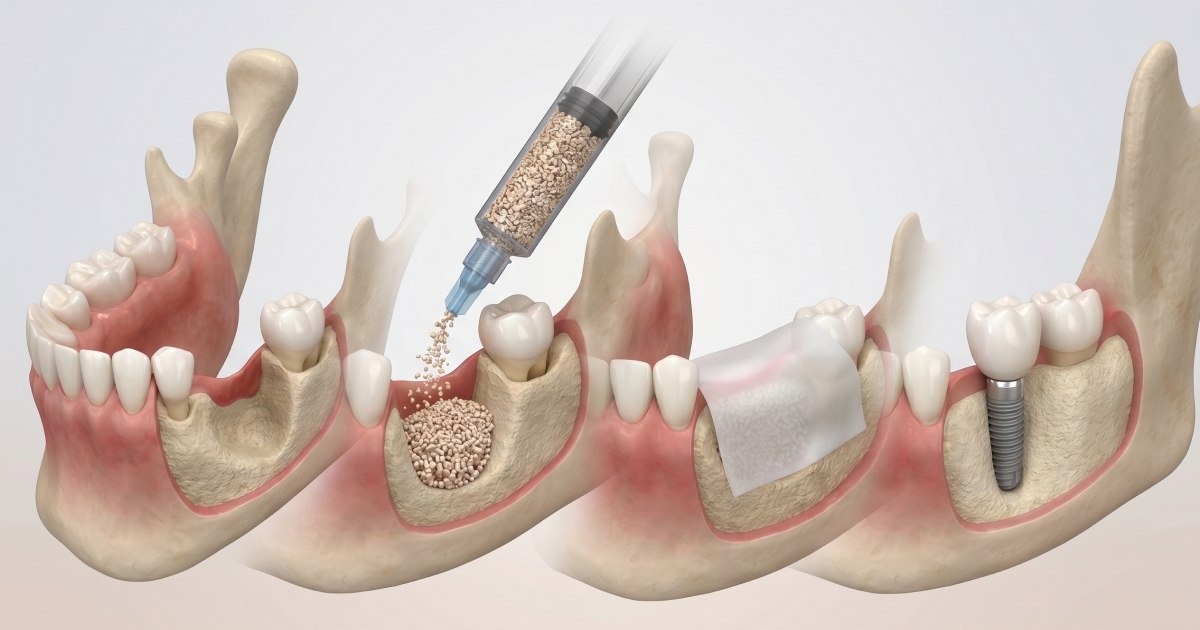
A dental bone graft is a highly specialized oral surgical procedure designed to replace missing bone in your jaw and encourage the natural regeneration of surrounding tissues. When you lose a tooth, the jawbone in that specific area no longer receives the mechanical stimulation from chewing. Without this stimulation, the bone rapidly deteriorates and resorbs into the body. This process can be accelerated by severe periodontitis (gum disease) or facial trauma.
The ultimate goal of a bone graft is to restore the jawbone’s structural integrity so it can safely support a dental implant. Once the grafting material is placed, your body uses it as a scaffold. Over several months, your natural bone cells migrate into this scaffold, replacing the graft material with your own healthy, living bone tissue. This vital process is known as osseointegration. Without adequate bone volume and density, osseointegration cannot occur, and dental implants will inevitably fail.
Why is Bone Grafting Needed Before Implants?
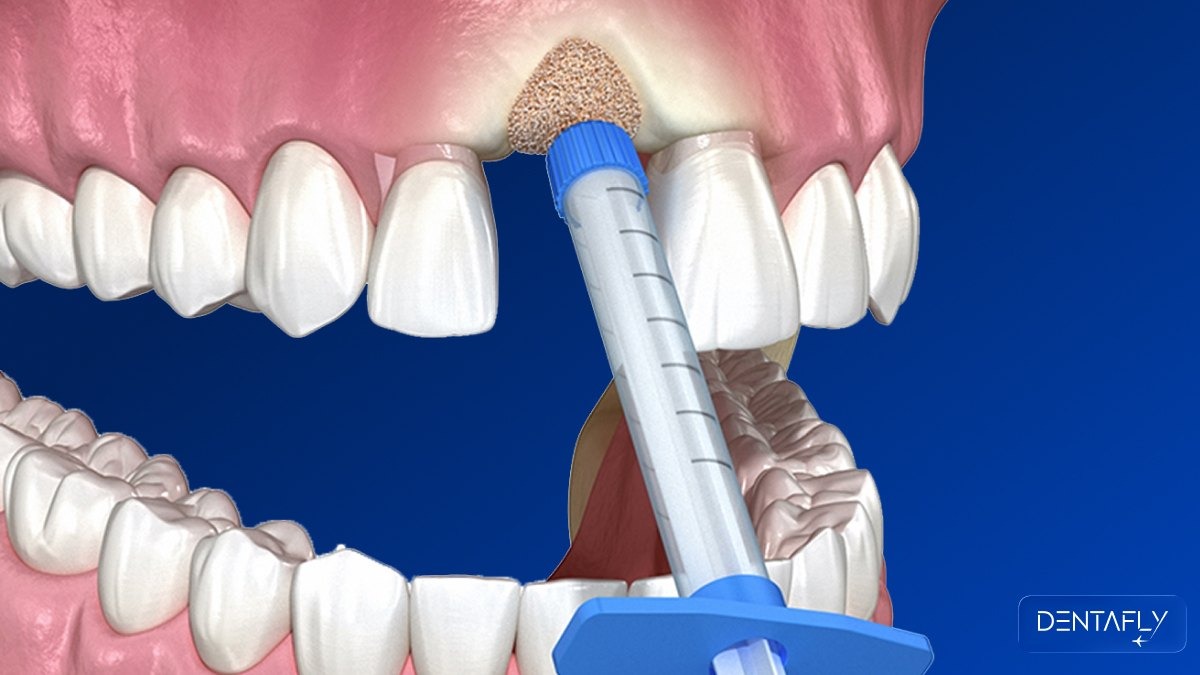
Dental implants act like artificial tooth roots, meaning they require a solid, deep foundation to withstand the immense bite forces generated during chewing. If your jawbone is too thin or too soft, the implant will not have enough support. During your consultation, your surgeon will assess your bone density using the standard D1-D4 classification system. D1 is dense like oak wood (often found in the anterior mandible), while D4 is soft like styrofoam (often found in the posterior maxilla). If you fall into the D3 or D4 category with insufficient volume, grafting is mandatory.
Long-term tooth loss
The most common reason for grafting. The jawbone begins to resorb within weeks of a tooth extraction. If years have passed, significant bone loss has already occurred, requiring augmentation before an implant can be placed.
Severe gum disease (periodontitis)
Periodontal disease doesn’t just destroy the gums; it silently eats away at the underlying alveolar bone that holds your teeth in place. Grafting is required to rebuild the foundation ruined by chronic infection.
Trauma or injury
A physical blow to the face or jaw can cause teeth to be knocked out and the surrounding bone to fracture or shatter. Reconstructive grafting is necessary to repair the defect.
Failed previous implants
If an implant fails (whether due to infection or poor placement), removing it usually leaves a significant void in the bone that must be grafted and healed before a new implant can be attempted.
Sinus expansion (upper jaw)
The maxillary sinuses sit just above your upper back teeth. When these teeth are lost, the sinus cavity drops down, leaving very little bone between the mouth and the sinus. A specific type of graft is needed to push the sinus back up and build the bone.
Signs You May Need a Bone Graft
- Missing teeth for over 5 years: Long-term gaps almost guarantee significant bone resorption.
- Bone loss visible in X-rays: A clear, diagnostic indicator of low density or volume.
- Loose or shifting teeth: A sign that the supporting bone structure is failing.
- Receding gums or facial sagging: Loss of jawbone can cause the lower third of the face to look ‘collapsed’ or prematurely aged.
- Difficulty fitting dental implants: If a surgeon has previously told you that you don’t have enough bone for traditional implants.
- Long-term denture wearing: Dentures do not stimulate the bone, leading to continuous and severe bone loss over time.
Types of Bone Graft Procedures
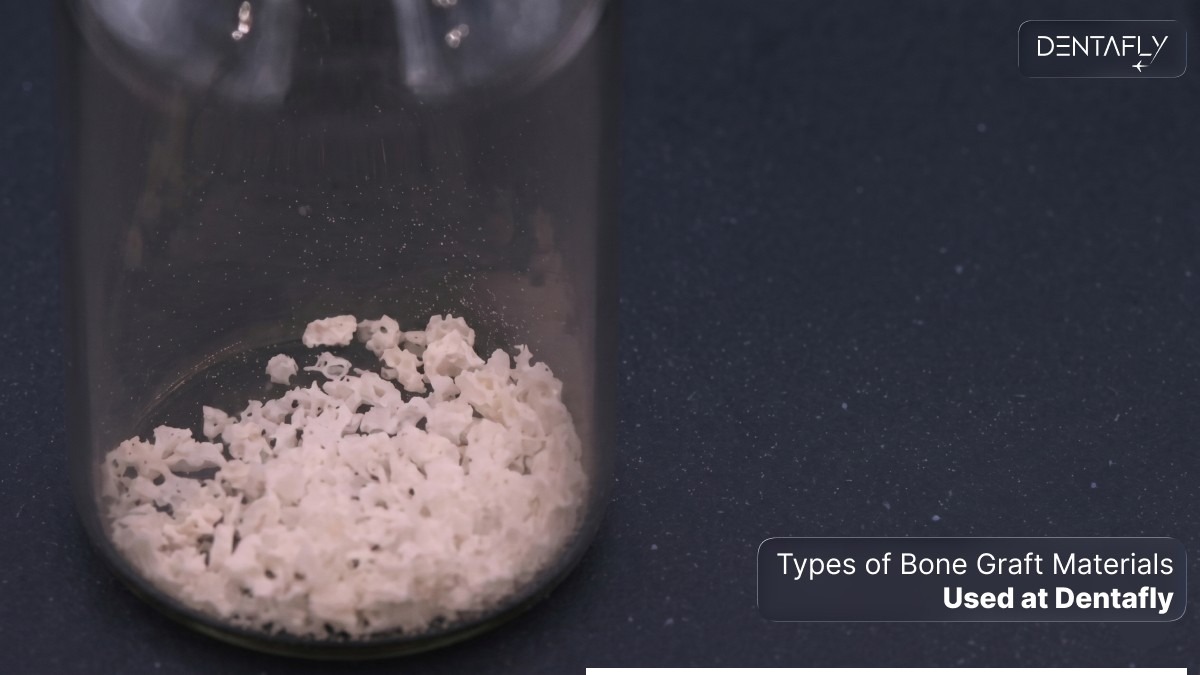
Not all bone defects are the same, and neither are the materials used to fix them. Your maxillofacial surgeon will select the exact type of graft based on the location and severity of your bone loss.
1. Autograft: The Gold Standard (Patient’s Own Bone)
An autograft utilizes bone harvested from your own body, usually from the chin, the back of the lower jaw, or in extreme hospital cases, the hip. Because it is your own living tissue, it is 100% biocompatible and contains your own cellular growth factors. It remains the gold standard for major reconstructions and large defects, offering the fastest integration.
2. Allograft (Sterilized donor bone)
An allograft uses bone sourced from a certified human tissue bank. The bone is rigorously screened, sterilized, and processed to FDA and CE standards, removing all organic material and leaving behind a neutral calcium framework. This option is excellent because it avoids the need for a second surgical site on your body to harvest bone.
3. Xenograft: Geistlich Bio-Oss (Animal-Derived)
A xenograft utilizes bone from an animal source, most commonly premium bovine (cow) bone. At Dentafly, we exclusively use Geistlich Bio-Oss, the world’s leading, scientifically proven xenograft material. Its hydrophilic surface and natural microporous structure provide an exceptional framework that mimics human bone perfectly, encouraging rapid cell migration. It is highly successful for maintaining volume, particularly in sinus lifts, and is our most utilized grafting material.
4. Alloplastic (Synthetic)
Alloplastic grafts are entirely lab-created, synthetic materials made from calcium phosphate, hydroxyapatite, or bioactive glass. They carry zero risk of disease transmission since they require no human or animal donor. While they serve as a good scaffold, they generally do not stimulate new bone growth as aggressively as natural materials.
5. Socket Preservation
Performed immediately after a tooth extraction, this preventative graft involves packing the empty socket with grafting material (often Geistlich Bio-Oss) and covering it with a membrane. It stops the rapid bone collapse that naturally occurs after an extraction, perfectly preserving the site for an implant 3 to 4 months later.
6. Bone Block Grafting
When there is a massive deficiency in bone width or height, a solid ‘block’ of bone is required rather than granulated powder. This block is typically harvested from the back of the patient’s mandible (jaw) or chin, shaped to fit the defect, and securely fixed in place with tiny titanium screws until it integrates.
Comparison Table
| Type | Source | Cost Level | Healing Time | Best For | Success Rate |
|---|---|---|---|---|---|
| Autograft | Patient’s own body | High | 4-6 Months | Severe defects, major reconstruction | Very High |
| Allograft | Human donor bank | Medium | 4-6 Months | General augmentation, moderate loss | High |
| Xenograft | Bovine (Geistlich Bio-Oss) | Medium | 6-9 Months | Sinus lifts, volume preservation | High |
| Alloplastic | Synthetic (Lab-made) | Low | 6-9 Months | Minor defects, patients refusing donors | Moderate to High |
Bone Grafting Techniques at Dentafly
Sinus Lifting
Also known as maxillary sinus augmentation, this technique is exclusively for the upper back jaw. The surgeon gently lifts the sinus membrane and places bone graft material beneath it, creating deep enough bone to support implants. For a deeper dive into this specific procedure, read our complete sinus lifting guide.
GBR: Guided Bone Regeneration
GBR is a sophisticated technique used to grow bone in specific areas. After the graft material is placed, the surgeon covers it with a specialized membrane. This membrane prevents fast-growing gum tissue from invading the space, giving the slower-growing bone cells the time and space they need to regenerate fully. It is a minimally invasive technique frequently combined directly with implant placement.
Ridge Augmentation
When teeth have been missing for a long time, the jaw ridge often becomes dangerously thin, too narrow to hold an implant. Ridge augmentation involves peeling back the gums and adding bone grafting material to widen the ridge, restoring its natural, robust contour.
Bone Block Grafting
For the most extreme cases of bone deterioration where granular grafts won’t hold, our maxillofacial surgeons perform complex bone block grafting. A solid piece of bone is harvested from the patient’s mandible, fitted precisely into the deficient area, and stabilized with titanium micro-screws, creating a massive influx of new structural support.
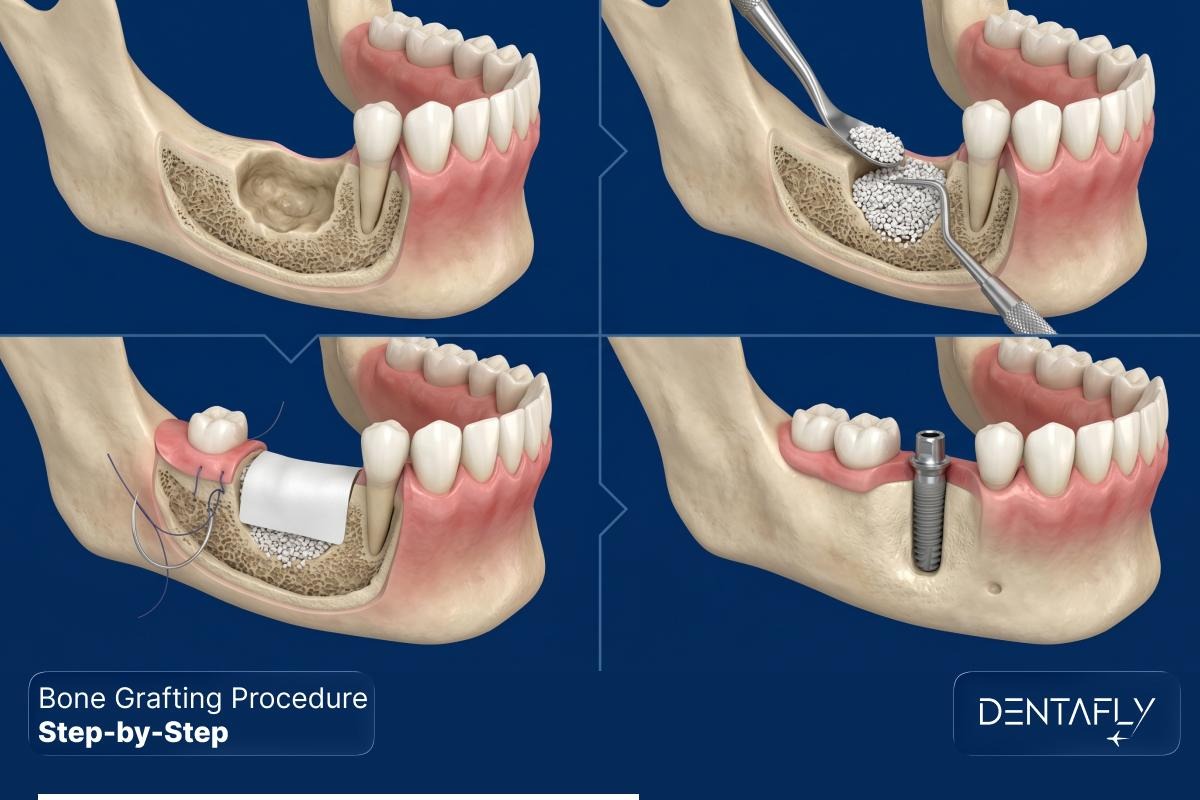
The Bone Grafting Procedure: Step-by-Step
Step 1: 3D CBCT Scan & Bone Assessment
Before any surgery begins, we utilize advanced Cone-Beam Computed Tomography (CBCT) to capture a high-resolution 3D scan of your skull. This allows our surgeons to accurately measure your bone density on the D1-D4 scale, identify vital nerves and sinus cavities, and create a flawless, millimeter-perfect digital treatment plan.
Step 2: Treatment Planning & Material Selection
You will have an in-depth consultation with our Lead Maxillofacial Surgeon. Based on the 3D scan, we will select the optimal grafting material (such as Geistlich Bio-Oss for a sinus lift or an autograft for a block) and outline your precise timeline for surgery and future implant placement.
Step 3: Anesthesia (Local + Sedation Options)
Your comfort is paramount. The procedure is typically performed under profound local anesthesia, ensuring you feel absolutely no pain. For patients with dental anxiety or those undergoing complex, multi-site grafting, we offer IV sedation or even full general anesthesia administered by our board-certified anesthesiologists.
Step 4: Surgical Site Preparation
Once you are completely numb and comfortable, the surgeon makes a highly precise, gentle incision in the gum tissue to expose the underlying deficient jawbone. The area is then meticulously cleaned and sterilized to prepare it for the new material.
Step 5: Placing the Bone Graft
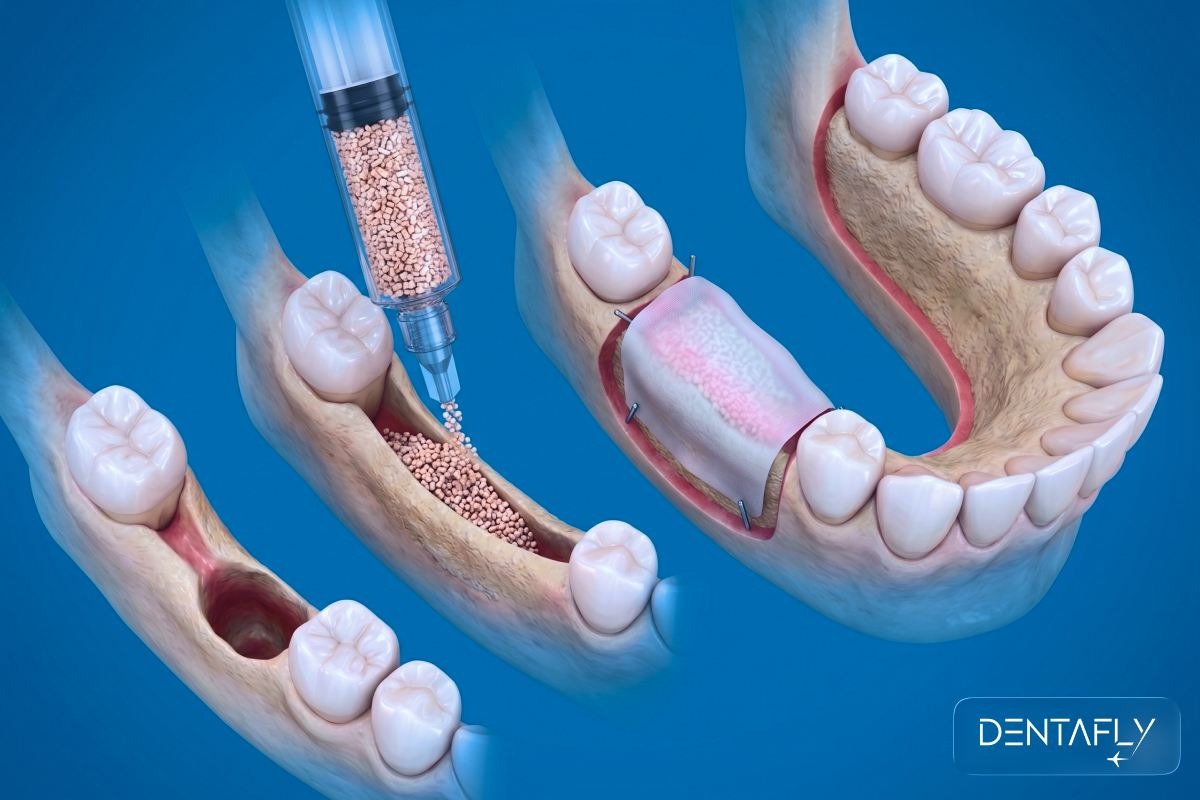
The selected grafting material is carefully packed into the bone defect. If necessary, the surgeon will shape the material to perfectly mimic the natural contours of a healthy jaw ridge.
Step 6: Membrane & Closure
To protect the graft and guide the healing process, a premium resorbable collagen-based membrane is placed over the grafting material. The gum tissue is then repositioned over the site and secured using ultra-fine sutures.
Step 7: PRP Therapy Application
As a standard of elite care, Dentafly applies Platelet-Rich Plasma (PRP) directly to the surgical site. Derived from a small sample of your own blood drawn just before surgery, PRP is packed with natural growth factors. It acts as a biological catalyst, drastically accelerating bone healing, reducing post-operative swelling, and significantly lowering the risk of infection.
Modern Technology at Dentafly
Our clinical success relies heavily on abandoning outdated methods in favor of cutting-edge technology. Every bone graft performed at Dentafly is mapped using CBCT-guided surgical planning, ensuring absolute precision.
Unlike standard clinics that rely on general dentists, your procedure is executed exclusively by specialized Maxillofacial Surgeons who possess the deep anatomical knowledge required for complex bone manipulation. Furthermore, our in-house CAD/CAM laboratory works in tandem with the surgical team, ensuring that any temporary prosthetics or future implant crowns are designed perfectly to match your newly augmented bone structure. We never compromise on materials, utilizing only globally recognized premium brands to guarantee lifelong stability.
Bone Graft Recovery Timeline
First 24-48 Hours
This is the acute inflammatory phase. Mild bleeding and oozing from the surgical site are completely normal. You should apply an ice pack to your cheek in 15-minute intervals to minimize swelling. Complete rest is required: absolutely no heavy lifting, exercise, or other strenuous activities, as elevated blood pressure can disrupt the delicate clot forming over your graft.
First Week
Swelling will peak around day three before subsiding. You must adhere strictly to a soft food diet and begin gentle saltwater rinses (after the first 24 hours). You will be taking a prescribed medication course of antibiotics to prevent infection, along with prescribed pain relievers to keep you comfortable throughout the week.
2-4 Weeks (Initial Healing)
Your gums will be mostly healed. If non-resorbable stitches were used, they will be removed during your first post-op check-up. You can gradually start returning to a more normal diet, though you must still avoid chewing directly on the grafted area.
1-3 Months (Bone Integration)
This is the quiet phase of osseointegration. Beneath the gums, new bone cells are busy forming and fusing with the graft material. We will monitor your progress via X-ray to ensure the bone is densifying correctly. No implants can be placed during this vulnerable window.
3-6 Months (Final Integration)
Osseointegration is complete. Your jaw has accepted the graft, and the bone density is now high enough to provide a vice-like grip for titanium. You are officially ready for dental implant placement.
Recovery Foods Guide
DO EAT (Soft & Cool): Yogurt, smoothies (no straws!), mashed potatoes, lukewarm soups, scrambled eggs, applesauce.
AVOID (Hard & Irritating): Nuts, chips, crusty bread, spicy foods, acidic citrus, very hot beverages, and sticky candies.
PRP Therapy: Speed Up Your Healing
At Dentafly, we don’t just wait for you to heal; we actively accelerate it. Platelet-Rich Plasma (PRP) therapy is a breakthrough in regenerative dentistry. Just before your procedure, we draw a small vial of your blood and spin it in a centrifuge to isolate the platelets and growth factors.
This highly concentrated ‘liquid gold’ is then mixed with your bone graft and applied to the surgical site. Because it is 100% natural and derived from your own body, there is zero risk of rejection. PRP floods the area with the exact proteins your body uses to repair tissue, resulting in remarkably faster bone integration, significantly less post-operative pain and bruising, and a denser final bone structure. Best of all, PRP therapy is included at no extra cost for all Dentafly bone graft patients.
Bone Grafting Cost in Turkey
At Dentafly, we believe in complete transparency. Our experienced maxillofacial team offers affordable, transparent prices at our flagship Antalya clinic, with optional pre-treatment consultations also available at our partner facility in Istanbul. The fees below cover the graft surgery itself; for full implant treatment costs, see our complete dental implants cost guide.
Cost by Graft Type at Dentafly
| Type | GBP | USD | EUR |
|---|---|---|---|
| Minor Graft | £150-£300 | $190-$380 | €175-€350 |
| Sinus Lift | £400-£700 | $500-$890 | €465-€815 |
| Major Bone Block | £800-£1,500 | $1,015-$1,905 | €930-€1,750 |
| Autograft (own bone) | £600-£1,000 | $760-$1,270 | €700-€1,165 |
| Xenograft (Geistlich) | £350-£550 | $445-$700 | €405-€640 |
UK vs Turkey Bone Graft Cost
| Procedure | UK Private Average | Turkey (Dentafly) | Your Savings |
|---|---|---|---|
| Minor Graft | £400-£900 | £150-£300 | 67% |
| Sinus Lift | £2,000-£3,500 | £400-£700 | 80% |
| Major Graft | £3,000-£6,000 | £800-£1,500 | 75% |
Does the NHS Cover Bone Grafting?
The simple answer is rarely. The NHS classifies dental implants (and the preliminary bone grafting required for them) as cosmetic procedures, except in extreme cases involving severe facial trauma or oral cancer reconstruction. Even if you qualify under those strict criteria, the NHS waiting lists for maxillofacial surgery can stretch for years. For the vast majority of UK patients seeking to replace missing teeth, private treatment is the only viable route.
What’s Included in Dentafly’s All-Inclusive Package?
- Maxillofacial surgeon fees & all premium grafting materials (Geistlich Bio-Oss)
- Local anesthesia and/or IV sedation
- High-resolution 3D CBCT scans
- All required post-operative medications (antibiotics, painkillers)
- 4-5 Star Hotel accommodation in Antalya
- VIP airport, hotel, and clinic transfers
- Face-to-face UK aftercare follow-ups in London
- Lifetime warranty on bone integration
Why Choose Dentafly for Your Bone Graft?
Maxillofacial Surgeons (Not General Dentists)
Bone grafting is not a simple filling. It is oral surgery. At Dentafly, these procedures are exclusively performed by registered Maxillofacial Surgeons who have undergone 5+ years of intense hospital-grade surgical training after completing dental school. They possess the elite skills necessary to manage complex bone manipulation and avoid vital sinus cavities and nerve canals. Meet our dental team to see their credentials.
AACI Accreditation & ISO 9001:2015
We don’t just claim high quality; we prove it. Dentafly operates under strict international healthcare protocols. We hold the prestigious AACI Accreditation (Program Number: C477-2025-MSC-TR, valid until Nov 2028) and maintain ISO 9001:2015 quality management certification. This guarantees your surgery takes place in a rigorously audited, hospital-grade sterile environment.
Premium Grafting Materials (Geistlich Bio-Oss)
We refuse to use generic, unproven biomaterials. Dentafly exclusively partners with premium brands like Geistlich Bio-Oss, the world’s absolute leader in xenograft technology, backed by over 30 years of extensive clinical track records and thousands of university studies.
PRP Therapy Standard (No Extra Cost)
While other clinics charge hundreds of pounds as an ‘add-on,’ we consider rapid healing a right, not a luxury. Platelet-Rich Plasma (PRP) therapy is integrated into every bone graft we perform, ensuring you heal faster, safer, and better.
UK Aftercare at Dentafly London Clinic
This is our greatest commitment to our British patients. Your care does not end when you fly back to Heathrow. Dentafly operates a dedicated, physical aftercare clinic in London (230 Church Lane, NW9 8SN). You can attend all your post-op review appointments, X-ray checks, and receive emergency support right here in the UK without ever needing to board a plane back to Turkey.
1,027+ Trustpilot Reviews + 700+ Video Testimonials
With an unmatched volume of verified success stories, Dentafly stands as one of the most trusted names in medical tourism. Don’t just take our word for it. Watch our 700+ patient video testimonials, and read through our 1,027+ glowing Trustpilot reviews.
Bone Graft Risks & Complications (Honest Section)
Common Side Effects (Manageable)
- Mild to moderate swelling: Typically peaking at 48 hours and resolving within 3-7 days.
- Bruising: Can appear on the cheek or jawline, fading naturally over a week.
- Discomfort: Easily managed with standard over-the-counter or prescribed analgesics.
- Temporary numbness: Minor localized numbness around the surgical site as the tissues heal.
Rare Complications
- Infection (<1%): Minimized by our sterile protocols and prophylactic antibiotics.
- Graft rejection (<2%): Extremely rare, especially when using autografts or premium Geistlich materials.
- Nerve damage: Highly unlikely due to our mandatory pre-surgical 3D CBCT mapping.
- Sinus complications: Specific to sinus lifts, a slight risk of membrane perforation exists, which our specialists are fully trained to repair instantly during surgery.
Risk Factors That Affect Success
- Smoking: This is the single biggest threat. Smoking restricts blood flow to the bone, drastically increasing the chance of graft failure.
- Uncontrolled diabetes: Impairs the body’s natural healing and immune response.
- Osteoporosis medications: Certain bisphosphonates can interfere with bone metabolism.
- Poor oral hygiene: Plaque buildup can lead to infections that destroy the fresh graft.
Success Rate at Dentafly: 95-98%
Thanks to our reliance on Maxillofacial Surgeons, 3D CBCT planning, and PRP therapy, our bone graft success rate hovers between 95% and 98%. This aligns with, and often exceeds, the highest global clinical averages documented in major peer-reviewed journals (e.g., Journal of Oral and Maxillofacial Surgery).
Alternatives to Bone Grafting
- Zygomatic Implants: For patients with severe bone loss in the upper jaw, standard implants are impossible. Zygomatic implants are extra-long titanium posts that anchor directly into the dense zygomatic bone (the cheekbone), bypassing the deteriorated upper jaw entirely and skipping the need for a sinus lift.
- Short Implants: When bone height is deficient but width is adequate, specialized ‘short’ implants can be used. These implants achieve their stability through a wider diameter rather than deep length, suitable for moderate bone loss.
- Tilted Implants (All-on-4 / All-on-6): By placing the posterior implants at a sharp 45-degree angle, we can maximize the use of the dense, naturally existing bone at the front of the jaw.
- Bone Expansion (Splitting): If your jawbone is tall enough but simply too narrow, our surgeons can perform a minimally invasive ridge-split.
- Mini Implants: Mini implants have a much narrower diameter than traditional implants. They require significantly less bone volume.
- Subperiosteal Implants: A highly specialized, custom-made metal framework that rests on top of the jawbone but strictly underneath the gum tissue.
How the Process Works for UK Patients
We have optimized our patient journey specifically for those traveling from the United Kingdom, ensuring a stress-free experience from the first email to the final check-up in London.
Step 1: Free X-Ray Review (UK)
Send us a recent panoramic X-ray or CBCT scan. Within 24 hours, our Maxillofacial team will review it, assess your bone density, and provide a comprehensive, no-obligation treatment plan and exact quote. Get your free X-ray assessment here.
Step 2: London Consultation Option
Prefer to speak face-to-face? You can visit our London Clinic in person. Meet with our dedicated UK patient coordinator, review your 3D scans together, and discuss every detail of your treatment plan before making any commitments.
Step 3: Travel to Antalya
It’s a quick 4-hour direct flight from London to Antalya. Upon arrival, our VIP transfer team will greet you at the airport and whisk you away to your pre-booked 4 or 5-star hotel to relax.
Step 4: Surgery (1-2 days)
- Day 1: Arrive at Dentafly for final 3D scans and the bone grafting procedure.
- Day 2-3: Rest at your hotel, enjoy soft foods, and return to the clinic for a quick post-op check-up.
- Day 4: Take your VIP transfer back to the airport and fly safely back to the UK.
Step 5: UK Aftercare at London Clinic
Unlike other clinics that leave you stranded once you fly home, your journey continues with us. You will attend your Week 1 follow-up and Month 1 review at our physical London clinic (NW9 8SN) for complete long-term monitoring and total peace of mind.
Real UK Patient Stories
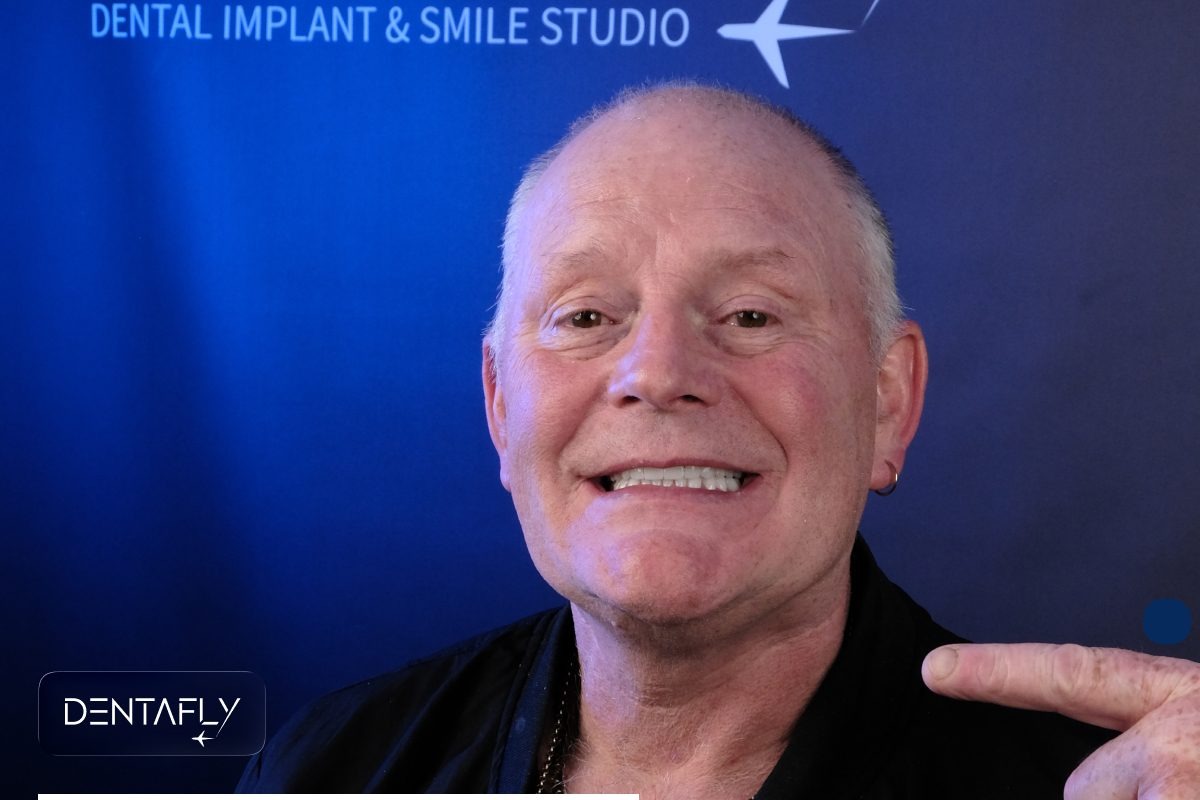
“I was told by my NHS dentist I’d never have fixed teeth again due to bone loss. Dentafly’s surgeons performed a major block graft on my lower jaw. Six months later, I have rock-solid implants. The professionalism was beyond anything I’ve seen in the UK.”
“The thought of a sinus lift terrified me. But the IV sedation at Dentafly meant I woke up and it was done. The healing was so fast, and having the Church Lane clinic for my check-ups made the whole process incredibly reassuring.”
“Quoted £4,000 for grafting alone in the UK. Paid a fraction of that at Dentafly, got the exact same Geistlich Bio-Oss material, and was treated like royalty. The VIP transfers and hotel made it feel like a holiday.”
“After losing my back teeth 10 years ago, my jaw was practically gone. The maxillofacial surgeon at Dentafly used my own bone to rebuild it. The 3D scanning tech they have is mind-blowing. Truly 5-star.”
“I had severe gum disease that ruined my upper jaw. They managed a full sinus lift and bone graft seamlessly. Best of all? Not having to fly back to Turkey just to have my stitches checked. The London team is brilliant.”
Frequently Asked Questions
How much does bone grafting cost in Turkey?
Is bone grafting painful?
How long does it take to heal?
Can I have a bone graft and implant on the same day?
What’s the success rate?
Will my body reject the graft?
Can I fly home after surgery?
Does the NHS cover bone grafting?
What if I’m a smoker?
How do you ensure quality (AACI, ISO)?
Can I combine with my implant treatment?
What’s included in the all-inclusive package?
References & Studies
- Journal of Oral and Maxillofacial Surgery: High survival rates (95%+) of dental implants placed in grafted maxillary sinuses.
- Geistlich Pharma AG Clinical Data: Documented 30-year efficacy and volume preservation stability of Bio-Oss® xenografts.
- AACI Accreditation Program Number: C477-2025-MSC-TR (Valid until Nov 16, 2028).
- ISO 9001:2015 Quality Management Systems Certification for Medical and Dental Services.
Related Reading
- Complete Dental Implants in Turkey Guide: Pillar overview of all implant types, brands, and procedures.
- Dental Implant Costs in Turkey: Full pricing breakdown across all brands and treatments.
- Sinus Lifting in Turkey: Detailed guide to maxillary sinus augmentation.
- All-on-4 Dental Implants: Tilted implant alternative when bone graft can be avoided.
- Osseointegration Overview: The biological process behind successful bone integration.
- Is Turkey Safe for Dental Implants?: Independent safety review for UK patients.
- Patient Reviews & Testimonials: 1,027+ Trustpilot stories from real Dentafly patients.
Ready to Restore Your Smile?
Send us your X-ray or panoramic scan. Our maxillofacial team will review your bone density and provide a transparent, no-obligation treatment plan within 24 hours.